Honey Gourami Care: Tank Size, Tankmates & Diet
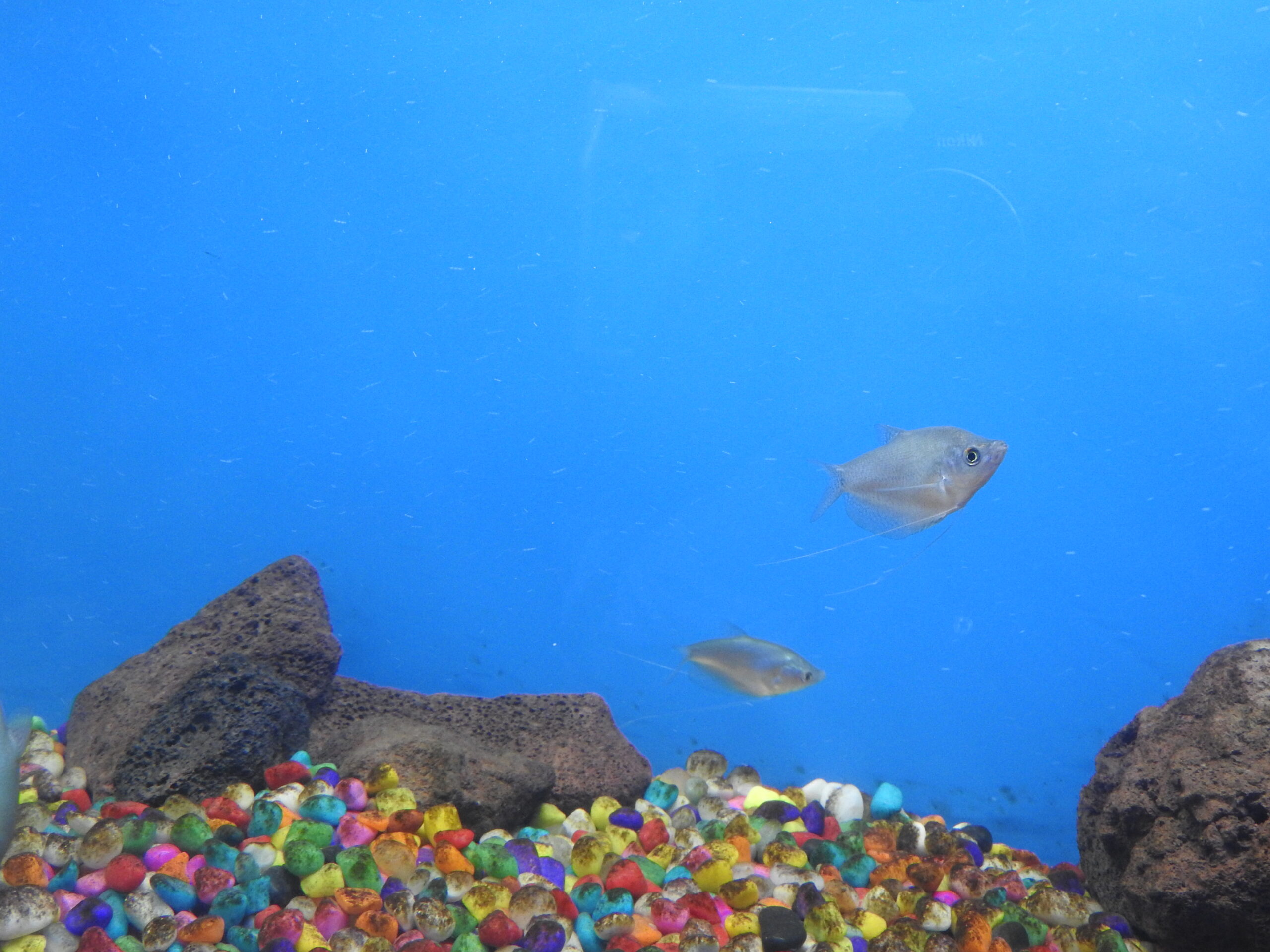
Honey gourami care is refreshingly simple, but the most important decision happens before you even set up the tank: choosing a honey gourami over its troubled cousin, the dwarf gourami. The honey gourami (Trichogaster chuna) is a small, golden, genuinely peaceful labyrinth fish that makes a perfect centerpiece for a planted nano community — and unlike the dwarf gourami, it has not been wrecked by a widespread farmed-fish disease. Get the right fish and the rest is easy.
Most honey gourami guides skip the one comparison that actually matters to a beginner standing at the store tank: honey versus dwarf gourami, and why the look-alikes are not interchangeable. This guide leads with that, then fills in honest numbers, three original reference tables, and a realistic setup plan so your gourami settles in bold and colorful instead of stressed and faded.
Honey Gourami vs Dwarf Gourami: Buy the Right One
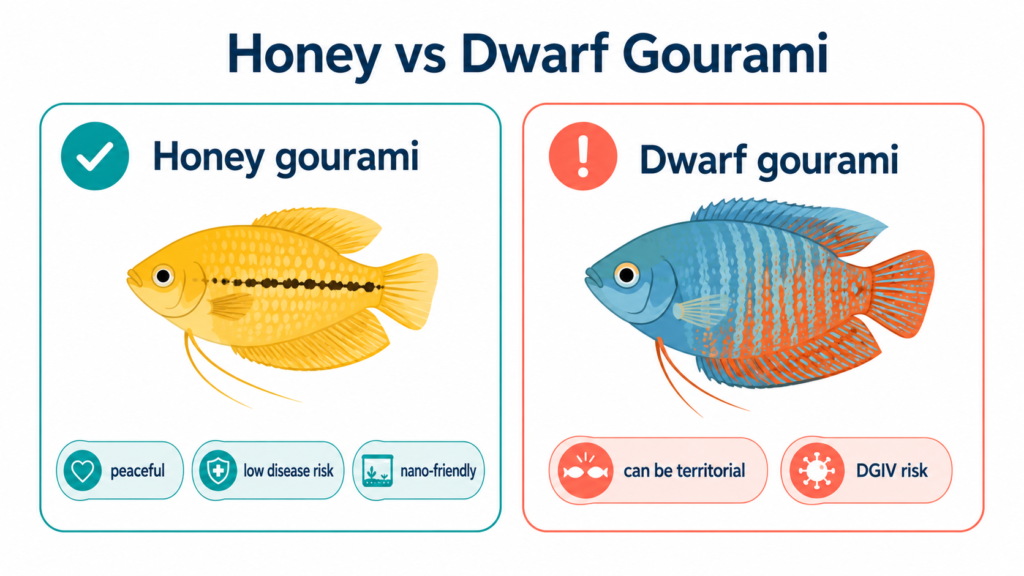
At a glance, honey and dwarf gouramis look similar — small, colorful, peaceful-seeming anabantids. The critical difference is health. Farmed dwarf gouramis (Trichogaster lalius) have been plagued for years by Dwarf Gourami Iridovirus (DGIV), an incurable disease so common in the trade that a large share of store dwarf gouramis are infected and die young. Honey gouramis are not affected by this epidemic to anywhere near the same degree, and they are calmer and less aggressive on top of it.
This is why experienced keepers steer beginners toward the honey gourami. The “sunset,” “red,” and “robin” honey gouramis you will see are simply selectively-bred color morphs of the same hardy species — all good choices. The dwarf gourami, beautiful as it is, carries a real risk that is out of your control. The table below makes the case at a glance.
| Trait | Honey gourami (choose this) | Dwarf gourami |
|---|---|---|
| Species | Trichogaster chuna | Trichogaster lalius |
| Adult size | ~1.5–2 in (4–5 cm) | ~2–3.5 in (5–9 cm) |
| Temperament | Peaceful, shy | Often territorial, can be nippy |
| Disease risk | Low | High (DGIV common in farmed stock) |
| Best for | Nano community centerpiece | Experienced keepers, larger tanks |
Honey Gourami Care: The Numbers That Matter
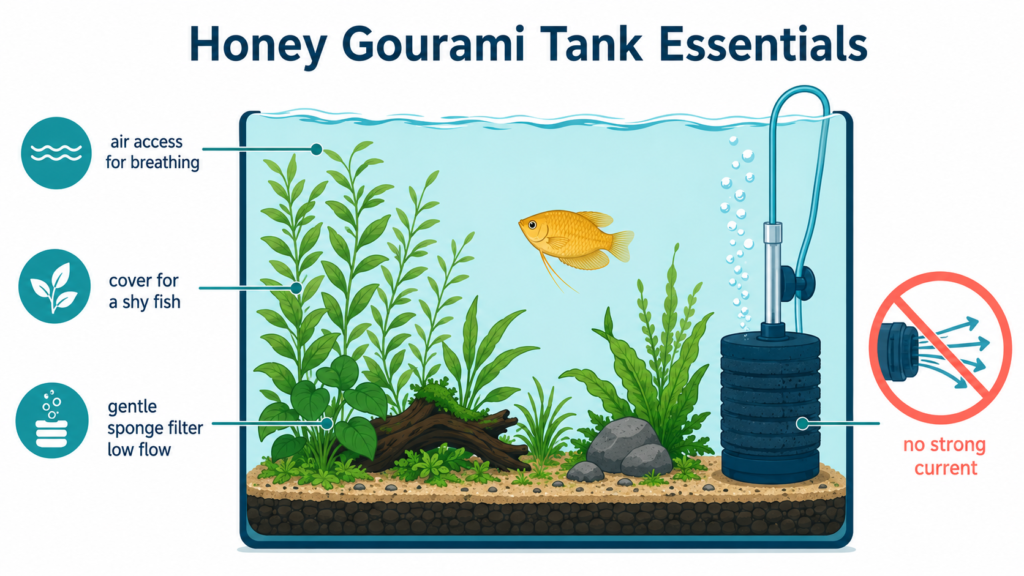
Honey gouramis are hardy and adaptable, which is why they suit beginners. They are labyrinth fish, meaning they gulp air at the surface using a specialized organ, so they tolerate lower-oxygen water better than most fish — but it also means they need easy access to the surface and gentle flow. They spend most of their time in the upper and middle levels of the tank, gliding slowly and exploring with their thread-like pelvic fins. The comfort-zone table below covers the essentials.
| Parameter | Comfortable range | How fussy? | What actually matters |
|---|---|---|---|
| Temperature | 74–80°F (23–27°C) | Forgiving | Steady tropical; a heater is usually needed |
| pH | 6.0–7.5 | Adaptable | Soft to neutral is ideal; stability beats target |
| GH (hardness) | 4–12 dGH | Adaptable | Soft to moderately hard is fine |
| Ammonia / Nitrite | 0 ppm | Zero tolerance | Non-negotiable; cycle the tank first |
| Tank size | 10 gal for one, 20 for a pair | Important | Plus ~5 gal per extra fish |
| Surface access | Open, calm surface | Critical | Labyrinth fish must breathe air; avoid strong flow |
| Temperament | Peaceful, shy | — | Needs cover and calm tankmates to feel secure |
The two rows beginners overlook are surface access and flow. Because a honey gourami breathes air, a tightly sealed lid with no air gap or a powerful filter that churns the surface both work against it. Keep the flow gentle and leave a little breathing room at the top.
Tank Setup, Tankmates, and the Cycle First
A single honey gourami is happy in a 10-gallon, while a pair wants 20 gallons to avoid the male pestering the female. If you are choosing a tank, our nano tank size guide comparing 3, 5, and 10 gallon setups covers the trade-offs. Decorate with plenty of plants, including some that reach the surface, plus floating cover — a shy gourami uses dense planting to feel safe and shows better color for it. Easy options are in our guide to the best low-light aquarium plants.
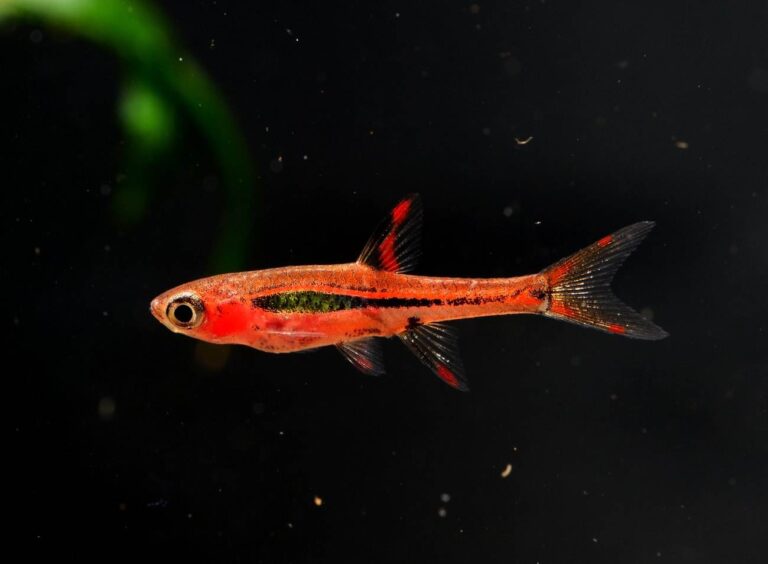
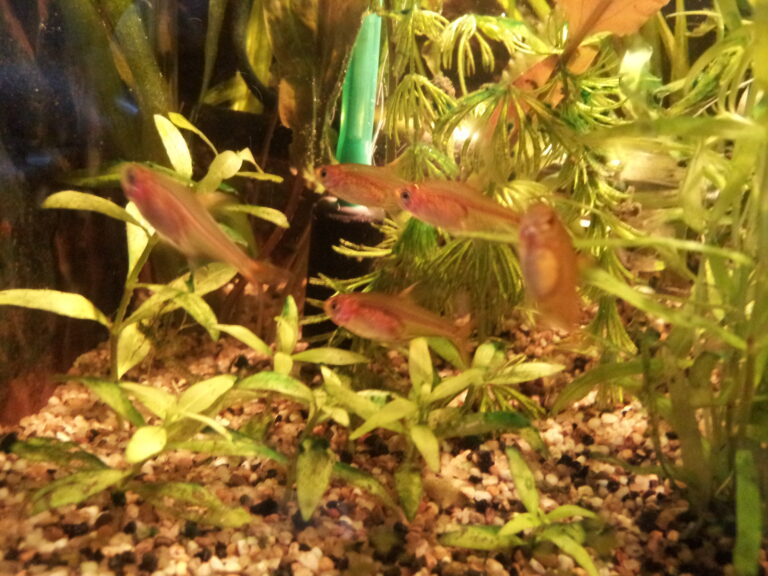
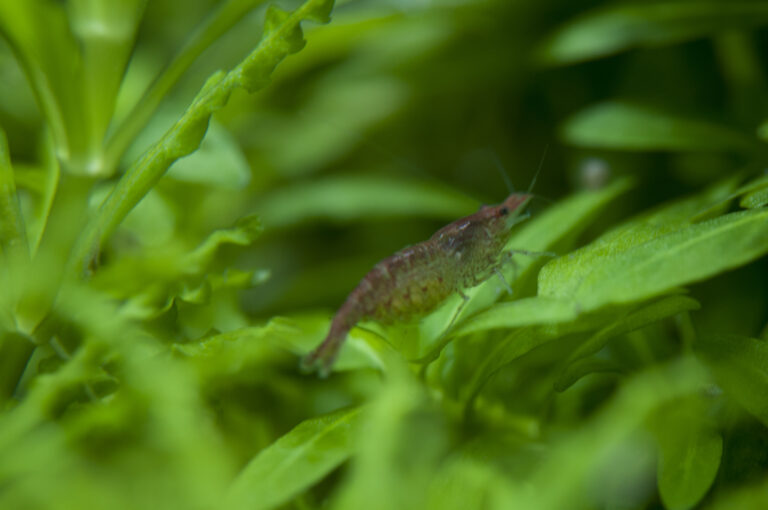
For tankmates, think small and calm. Honey gouramis pair well with peaceful nano fish that occupy different levels, such as neon tetras and small rasboras, and they generally ignore cherry shrimp (though they may nip the occasional shrimplet). Avoid fin-nippers and boisterous fish, which keep a timid gourami hiding. As a fellow labyrinth fish, the gourami shares some care logic with the betta — though the two should not be housed together.
Tip: Honey gouramis are slow, deliberate eaters. In a community tank, make sure faster fish do not snatch every meal before the gourami ambles over — target-feed near it if needed.
As always, the non-negotiable first step is cycling. Run a fishless cycle so the tank can process toxic ammonia before any fish goes in — our step-by-step fishless cycling guide covers it, and how long before you can safely add fish sets timing. The full gear list lives in our nano aquarium starter checklist.
Feeding, Behavior, and Breeding
Honey gouramis are easygoing omnivores. A quality micro-pellet or flake forms the staple, supplemented with frozen or live foods like baby brine shrimp, daphnia, and bloodworms for color and condition. Feed small amounts once or twice a day, only what they finish in a couple of minutes. Because they are unhurried feeders, watch that tankmates do not outcompete them.
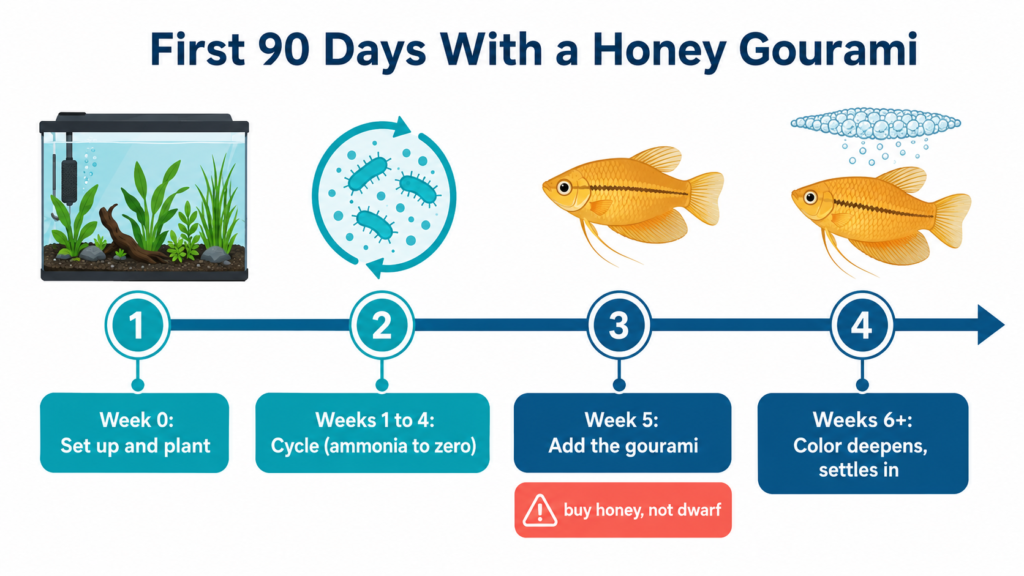
Behaviorally, a settled honey gourami is calm and curious, “tasting” surfaces with its feeler-like fins. A washed-out, hiding fish usually signals a new tank, water-quality issues, or stress from pushy tankmates. Color and confidence build over the first week or two as it acclimates. Breeding is achievable and fascinating: males build a floating bubble nest, sometimes woven into surface plants, then guard the eggs and fry. The action table below sums up the whole journey.
| Stage / week | Action | Target or amount | Rough cost (mid-2026) |
|---|---|---|---|
| Week 0 (shopping) | 10–20 gal tank, heater, gentle filter, light, dechlorinator | Choose honey, not dwarf | $80–$150 |
| Weeks 1–4 | Fishless cycle; plant heavily incl. surface cover | Ammonia & nitrite to 0 ppm | $20–$40 (plants) |
| Week 4–5 | Acclimate one gourami (or a pair in 20 gal) | Drip-acclimate ~45–60 min | $6–$15 (fish) |
| Weekly, ongoing | Water change + small feeds | 10–20% change; feed 1–2x/day | ~$4/mo (food + conditioner) |
| Optional | Lower water level, add floating plants to spur a bubble nest | Male guards eggs/fry | $0 |
For the species itself, the Wikipedia entry on Trichogaster chuna is a solid neutral reference on its biology and range in South Asia.
Common Beginner Mistakes to Skip
Three errors account for most honey gourami disappointments, and all are avoidable. First, accidentally buying a dwarf gourami and inheriting its disease risk. Second, strong filter flow or a fully sealed lid that interferes with surface breathing. Third, pairing a timid gourami with boisterous or nippy tankmates.
- Buying a dwarf by mistake — confirm it is Trichogaster chuna (honey).
- Strong current — use a gentle filter and leave a surface air gap.
- Pushy tankmates — choose small, calm, non-nipping companions.
- Skipping the cycle — fix with patience and a test kit, not chemicals.
For the broader patterns that sink first tanks, our 9 beginner aquarium mistakes article is worth a read. Results always vary with your tap water and room temperature, so treat every number here as a target band, not a guarantee.
Keep Exploring NanoTank Lab
- Best Nano Tank Fish for Beginners — where honey gouramis rank as a centerpiece pick.
- Betta Fish Care in a Nano Tank — another labyrinth fish, with key differences.
- How to Cycle a New Aquarium (fishless cycling) — the non-negotiable first step.
- Neon Tetra Care Guide — a peaceful, compatible schooling tankmate.
- Best Low-Light Aquarium Plants — easy cover for a shy gourami.
Frequently Asked Questions
Are honey gouramis good for beginners?
Yes, honey gouramis are one of the best beginner centerpiece fish. They are hardy, peaceful, adaptable to a range of water conditions, and small enough for a 10-gallon nano tank. The main thing a beginner must get right is buying a true honey gourami rather than the disease-prone dwarf gourami, and providing gentle flow and surface access.
What is the difference between honey and dwarf gouramis?
They are different species. Honey gouramis (Trichogaster chuna) are smaller, more peaceful, and far less affected by disease. Dwarf gouramis (Trichogaster lalius) grow larger, can be territorial, and farmed stock is widely affected by an incurable iridovirus (DGIV). For a peaceful nano community, the honey gourami is the safer, hardier choice.
What size tank does a honey gourami need?
A single honey gourami is comfortable in a 10-gallon tank. For a pair, use at least 20 gallons so the male cannot constantly pester the female, and add roughly 5 gallons for each additional fish. A planted tank with surface cover and gentle flow suits them best, since they are shy and breathe air at the surface.
Do honey gouramis need a heater?
Usually yes. Honey gouramis are tropical fish that do best around 74 to 80°F (23 to 27°C), so in most rooms a small adjustable heater is needed to hold a stable temperature. Avoid letting the tank swing or run cold. Pair the heater with gentle filtration that does not churn the surface, since these labyrinth fish breathe air.
Can honey gouramis live with shrimp and other fish?
Yes, with peaceful, similarly-sized tankmates. Honey gouramis coexist well with small schooling fish like neon tetras and rasboras, and they usually leave adult cherry shrimp alone, though they may eat tiny shrimplets. Avoid fin-nippers and aggressive species, which stress a timid gourami. Keep only one male per small tank to prevent squabbling.
Why is my honey gourami pale or hiding?
Pale color and constant hiding usually mean stress. Common causes are a brand-new or unstable tank, poor water quality, too little cover, or pushy tankmates. Make sure the tank is fully cycled, add dense planting and floating cover, keep flow gentle, and choose calm companions. Most healthy honey gouramis color up and grow bolder within a week or two of settling in.