
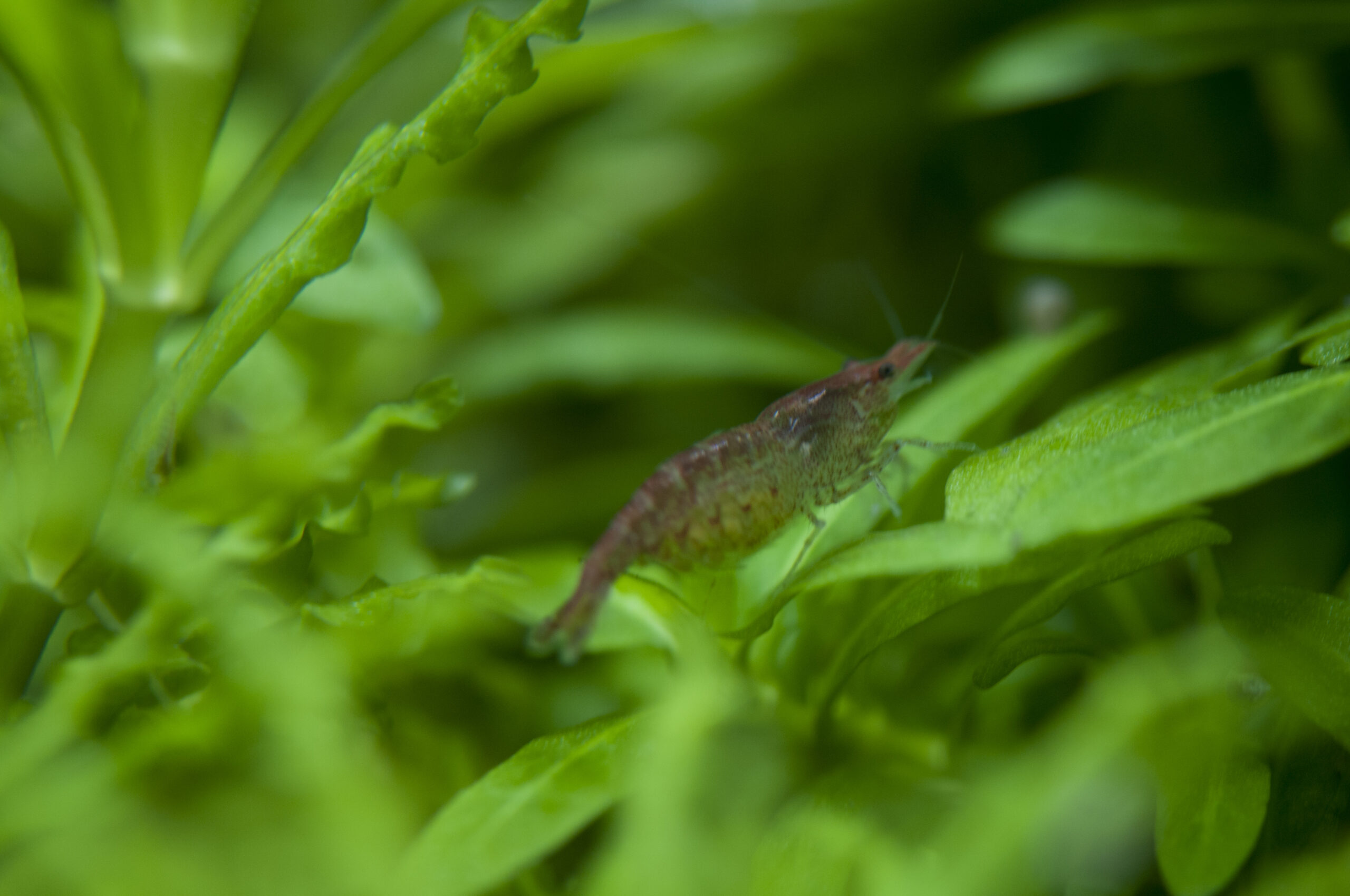
Cherry shrimp care is often sold as “just drop them in and they breed forever,” and that single line of advice is exactly why so many beginners watch their first colony slowly vanish over a few weeks. Neocaridina davidi (the red cherry shrimp) is genuinely one of the most forgiving freshwater invertebrates you can keep, but “forgiving” is not the same as “indestructible.” Get a handful of small things right early, and a $20 starter group can turn into a self-sustaining cloud of dozens within a season.
Most articles on cherry shrimp care stop at a tidy list of “ideal parameters” and never tell you the part that actually kills shrimp: the swing, not the number. The gap is stability, acclimation, and what a brand-new tank is missing on day one. This guide fills that in with honest numbers, two original reference tables you can keep open while you shop, and a realistic first-90-days timeline so your colony grows instead of dwindles.
Why Cherry Shrimp Are the Best Beginner Invertebrate
Cherry shrimp earn their beginner reputation for three concrete reasons. They tolerate a wide parameter band, so you do not need lab-grade precision. They stay tiny (adults reach about 1 to 1.5 inches), so a small footprint holds a real colony. And they breed readily in plain freshwater without any special trigger, unlike many other dwarf shrimp that demand soft, acidic water or saltwater larval stages.
That hardiness is also their trap. Because they survive imperfect conditions for a while, beginners assume everything is fine right up until a molt goes wrong or a temperature spike thins the colony. The fix is not buying more gear. It is understanding which numbers shrimp actually care about, and which ones are forgiving. The comparison table below sorts that out.
| Parameter | Comfortable range | How fussy? | What actually matters |
|---|---|---|---|
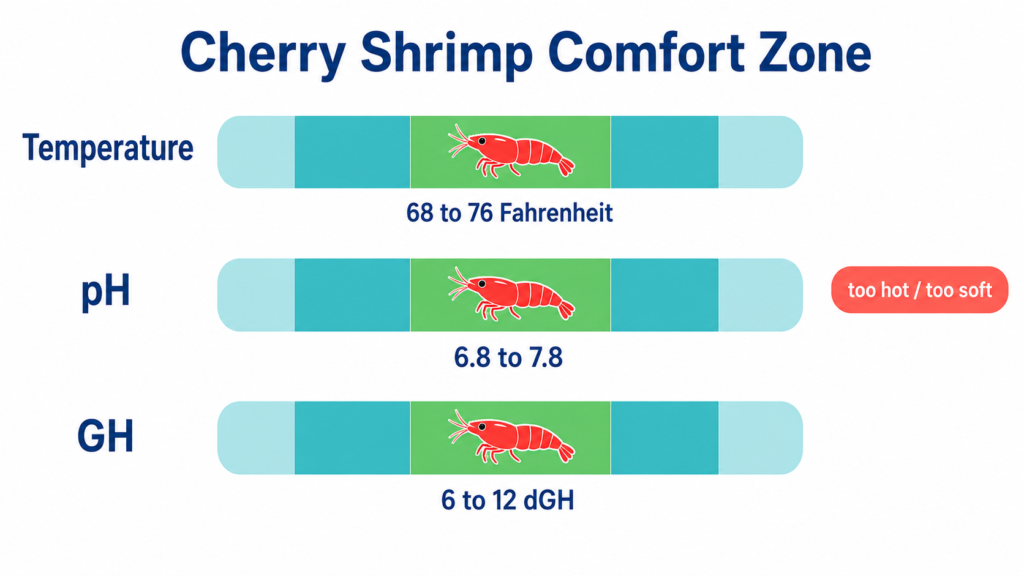
| Temperature | 68–76°F (20–24°C) | Forgiving on value, strict on stability | Avoid daily swings >4°F; sustained heat at 80°F and above shortens lifespan |
| pH | 6.8–7.8 | Wide | Stability beats hitting an exact target |
| GH (general hardness) | 6–12 dGH (~110–215 ppm) | Important | Shrimp need minerals to molt; too soft is a real killer |
| KH (carbonate hardness) | 2–8 dKH | Moderate | Some buffer prevents sudden pH crashes |
| TDS | 150–300 ppm | Helpful to track | A cheap pen flags water-change mistakes early |
| Ammonia / Nitrite | 0 ppm | Zero tolerance | Non-negotiable; this is the #1 colony killer |
| Nitrate | Below 20 ppm | Moderate | Keep low with plants and water changes |
The two rows people skip are GH and ammonia. Shrimp build their next shell from dissolved minerals, so water that is too soft causes failed molts no test for “pH” will ever reveal. And because shrimp are far more sensitive to ammonia than most beginner fish, a tank that is not fully cycled is the most common reason a first colony disappears.
Tank Size, Setup, and the Cycle That Comes First
You can technically keep a few shrimp in a 3-gallon tank, but a 5-gallon is the sweet spot for a beginner colony, and a 10-gallon is even more stable because a larger water volume resists temperature and chemistry swings. If you are still choosing a tank, our nano tank size guide comparing 3, 5, and 10 gallon setups walks through the real trade-offs for stocking and stability.
The single most important step in cherry shrimp care happens before a shrimp ever enters the tank: cycling. A new aquarium has no bacteria to convert toxic ammonia into far safer nitrate, and shrimp are too sensitive to survive that gap. You must run a fishless cycle first. Our step-by-step guide to fishless cycling a new aquarium covers the full process, and how long before you can safely add livestock sets realistic expectations on timing.
Tip: A mature, planted tank is the best shrimp food source you are not buying. Established moss and biofilm feed baby shrimp 24/7, which is why colonies in older tanks explode in numbers while brand-new tanks barely hold steady.
For hardware, shrimp keeping is refreshingly cheap, with one critical rule: never use a bare intake filter. A standard hang-on-back or internal filter will vacuum up babies. Use a sponge filter, or slip a foam pre-filter over any intake. Beyond that, a basic light for plants and an adjustable heater (only if your room drops below the comfort band) round out the list. The full starter inventory lives in our nano aquarium starter checklist.
Water, Food, and Daily Cherry Shrimp Care
Day-to-day cherry shrimp care is mostly about doing very little, very consistently. Small, regular water changes beat large occasional ones, because a big swap can swing temperature and TDS enough to trigger a dangerous mass molt. Aim for roughly 10 to 20 percent weekly, matched in temperature, and dechlorinated. Chlorine and chloramine from tap water are lethal to shrimp, so a conditioner is mandatory.
Feeding is where good intentions cause the most harm. Shrimp graze biofilm continuously, so they need only a tiny supplemental feeding every two or three days. Overfeeding fouls the water and spikes ammonia, which loops right back to the number-one killer. A blanched piece of zucchini or a sinking shrimp pellet the size of a grain of rice, fully eaten within a couple of hours, is plenty. Remove anything uneaten.
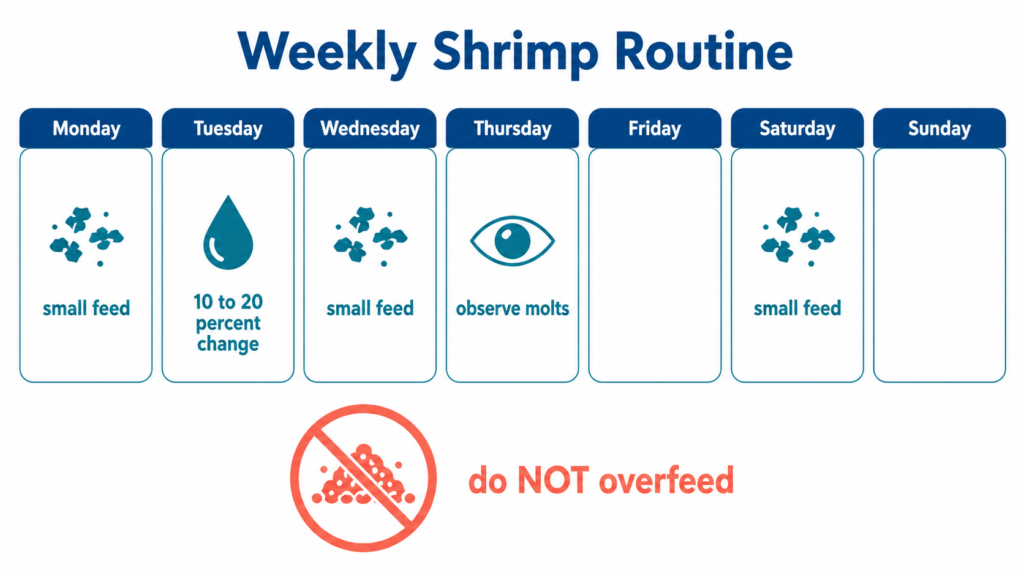
One sight that panics every new keeper is a translucent shrimp-shaped “ghost” on the substrate. That is almost always a molt, not a death. Shrimp shed their exoskeleton to grow, and you should leave the empty shell in the tank because they re-consume it to recover minerals. A genuine die-off looks different: shrimp turning opaque pink-white (cooked-looking) and not being eaten. If you see repeated failed molts, the usual culprit is GH that is too low, not disease.
Tankmates, Color, and Breeding
The safest cherry shrimp tank is a species-only tank, because almost any fish that fits a shrimplet in its mouth will eat the babies. If you want fish, choose genuinely tiny, peaceful, non-predatory species and accept that you will lose some shrimplets. A betta is a popular but risky pairing in a heavily planted tank, covered in our betta fish care guide for nano tanks, and our roundup of the best nano tank fish for beginners notes which species are shrimp-tolerant. A nano-fish stocking calculator (internal link, coming soon) can help you avoid overstocking.
For color, the rule is simple: cull and isolate. Cherry shrimp grades (cherry, sakura, fire red, painted fire red) describe how solid and deep the red is. If you keep only your reddest individuals together and avoid mixing different Neocaridina color morphs (blue, yellow, green), the colony stays vivid. Mixing morphs eventually produces dull, wild-type brown offspring within a generation or two.
Breeding requires almost no effort once parameters are stable. A “berried” female carries a clutch of eggs under her tail (her swimmerets) for about two to four weeks, fanning them with water, then releases miniature, fully-formed shrimp with no larval stage. Provide cover like java moss, keep ammonia at zero, keep GH in range, and the colony compounds on its own. The action table below turns all of this into a buy-and-do checklist.
| Stage / week | Action | Target or amount | Rough cost (mid-2026) |
|---|---|---|---|
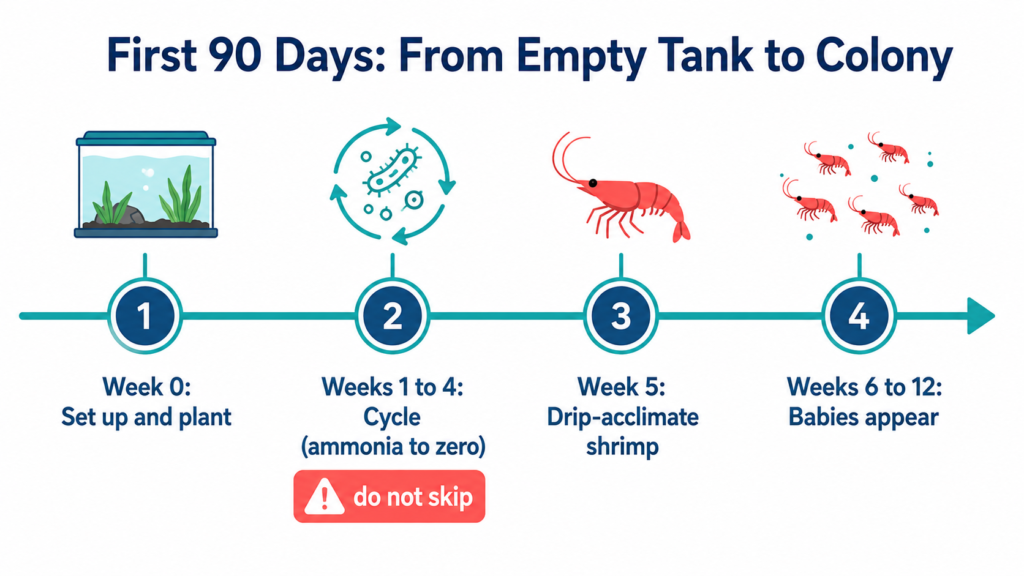
| Week 0 (shopping) | 5–10 gal tank, sponge filter, light, dechlorinator, GH/KH + TDS test | Match temp band; sponge filter only | $60–$120 |
| Weeks 1–4 | Fishless cycle; add live plants & moss early | Ammonia & nitrite must reach 0 ppm | $15–$30 (plants) |
| Week 4–5 | Drip-acclimate first 8–10 shrimp | ~2 hrs drip; TDS & temp matched | $20–$45 (shrimp) |
| Weekly, ongoing | Water change + tiny feed | 10–20% change; feed 2–3x/week | ~$3/mo (food + conditioner) |
| Weeks 6–12 | Watch for berried females; do nothing extra | Eggs hatch in ~2–4 weeks; leave molts in | $0 |
If you want to understand why these animals stay small and thrive at room temperature instead of needing a heater the way tropical fish do, the broader context is in our coldwater versus tropical nano tank comparison. For the species itself, the Wikipedia entry on Neocaridina davidi is a solid neutral reference on its biology and range.
Common Beginner Mistakes to Skip
Three errors account for most failed first colonies, and all of them are avoidable for free. First, adding shrimp to an uncycled tank, the silent killer covered above. Second, fast acclimation, dropping shrimp straight into water with a different TDS or temperature, which shocks them into a fatal molt. Always drip-acclimate over an hour or two. Third, chasing perfect numbers by dumping in pH or buffer products, which creates the swings shrimp hate far more than a stable “imperfect” reading.
- Skipping the cycle — fix with patience and a test kit, not chemicals.
- Copper exposure — many “general” fish products and some plant fertilizers contain copper, which is toxic to invertebrates; check labels.
- Big water changes — keep them small and temperature-matched.
- Bare filter intakes — always pre-filter to protect babies.
For the bigger picture beyond shrimp specifically, our 9 beginner aquarium mistakes article covers the broader patterns that sink first tanks. Results always vary with your tap water and room temperature, so treat every number here as a target band, not a guarantee.
Keep Exploring NanoTank Lab
- How to Set Up a Nano Aquarium — the full build before you add shrimp.
- How to Cycle a New Aquarium (fishless cycling) — the step shrimp cannot survive without.
- Nano Tank Size Guide (3 vs 5 vs 10 gallon) — pick the right footprint for a colony.
- Best Nano Tank Fish for Beginners — which tankmates won’t eat your babies.
- How Much Does a Nano Aquarium Cost — budget the whole setup honestly.
Frequently Asked Questions
How many cherry shrimp can I start with?
Start with 8 to 10 shrimp in a 5-gallon tank. That is enough genetic diversity and enough individuals to establish a breeding colony quickly, without overloading a freshly cycled tank. They breed fast, so resist buying more than your cycled tank can handle; the population will climb on its own within a couple of months.
Do cherry shrimp need a heater?
Usually not, if your room stays between about 68 and 76°F (20 and 24°C). Cherry shrimp thrive at typical room temperature, which is part of why they are so beginner-friendly. Add a small adjustable heater only if your room regularly drops below the comfort band, and prioritize a stable temperature over a precise one.
Why do my cherry shrimp keep dying after water changes?
The most likely cause is a swing in TDS or temperature from a change that was too large or too fast. Keep water changes to 10 to 20 percent, match the new water’s temperature, and always dechlorinate. A sudden parameter shift can force a stressful molt, so smaller and more frequent is far safer than big and occasional.
Is that empty shell a dead shrimp?
Almost always it is a molt, not a death. A clear, hollow, perfectly shrimp-shaped shell is the old exoskeleton your shrimp shed to grow. Leave it in the tank; shrimp re-consume the molt to reclaim minerals. A real death looks opaque and pinkish-white, and tankmates typically scavenge it quickly.
Can I keep cherry shrimp with a betta or other fish?
You can, but expect to lose shrimplets, because most fish eat anything mouth-sized. A heavily planted tank with dense moss gives babies hiding spots and improves survival odds. For the highest colony growth, a species-only shrimp tank is best; if you want fish, choose tiny, peaceful, non-predatory species.
How long until cherry shrimp breed and the colony grows?
With stable parameters, expect berried females within a few weeks of settling in, and eggs hatch after roughly two to four weeks (faster in warmer water, slower in cooler). From a starting group of 8 to 10, many keepers see a visibly larger colony within two to three months. Growth rate varies with temperature, food, and how many shrimplets survive any tankmates.