
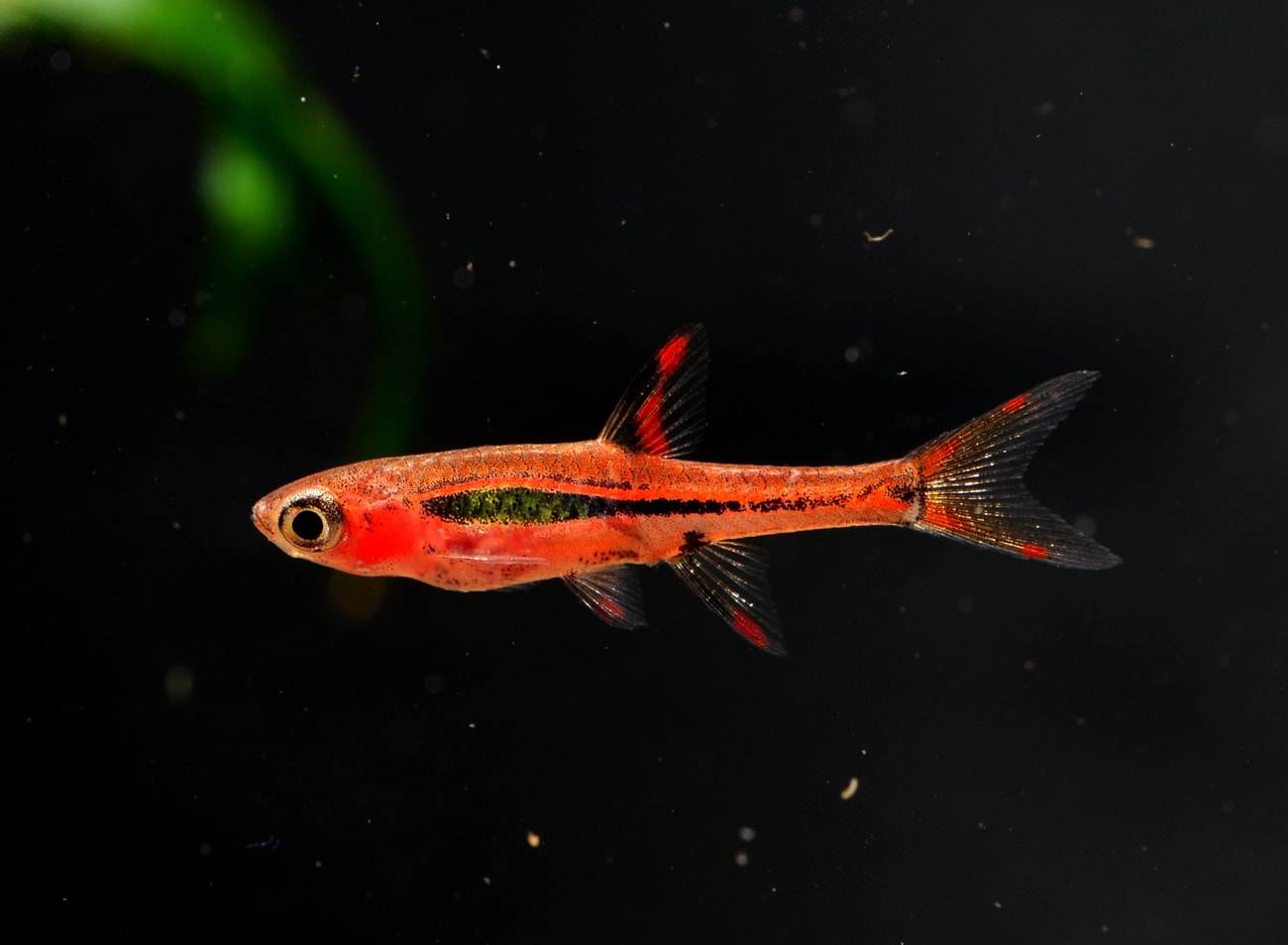
Chili rasbora care looks deceptively simple on a store tag: tiny, peaceful, perfect for nano tanks. All true — and all of it hides the one fact that sinks most first attempts. Boraras brigittae is among the smallest fish in the hobby, and that smallness makes it far more sensitive to an unstable, immature tank than the hardy bettas and Endlers beginners usually start with. A chili rasbora is a brilliant nano fish, but it is not a brand-new-tank fish.
Most chili rasbora guides hand you a parameter chart and stop there, never mentioning the two things that actually decide success: school size and tank maturity. Kept in twos and threes in a freshly set-up tank, these fish stay washed-out grey, hide constantly, and slowly fade away. This guide fills that gap with honest numbers, three original reference tables, and a realistic timeline so your school turns deep red and confident instead of pale and stressed.
Why Chili Rasboras Are Trickier Than They Look
Chili rasboras earn their nano reputation honestly: adults reach only about 0.6 to 0.8 inches, so a 10-gallon holds a sizable school, and they are utterly peaceful. The problem is the flip side of that tiny body. A fish this small has almost no buffer against ammonia or nitrite, so the very thing beginners skip — a fully completed cycle — is the difference between a thriving school and a quiet die-off.
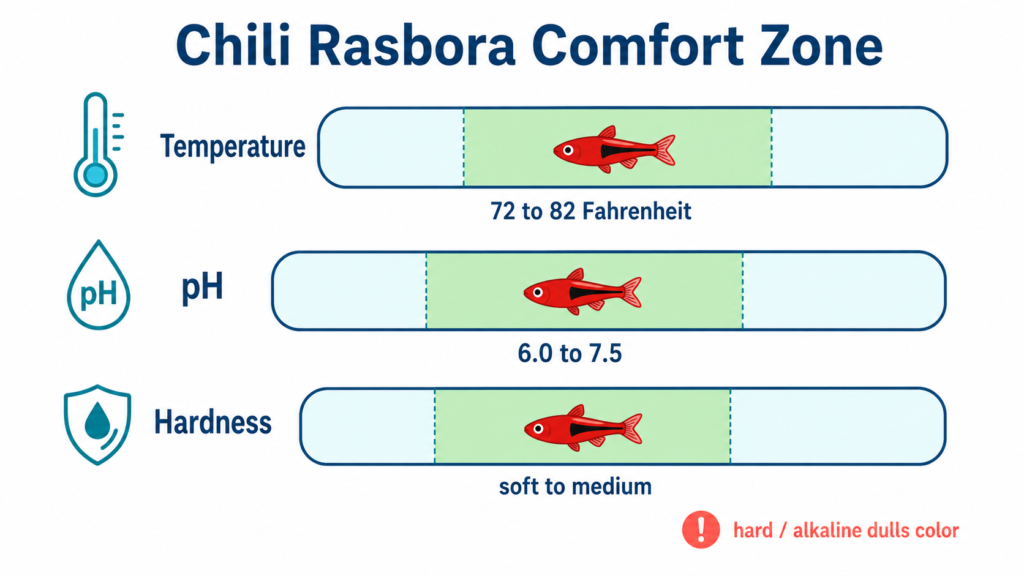
The second trap is psychological, not chemical. Chili rasboras are obligate schoolers that read safety from numbers. In a small group they perceive constant threat, hide in the back, and never develop the deep red color they are famous for. Keepers then assume they bought “dull” fish, when really they bought too few. The comfort-zone table below separates the numbers that matter from the ones that do not.
| Parameter | Comfortable range | How fussy? | What actually matters |
|---|---|---|---|
| Temperature | 72–82°F (22–28°C) | Forgiving | Stable is better than precise; mid-range is ideal |
| pH | 6.0–7.5 | Prefers acidic | Loves soft, slightly acidic blackwater; tolerates up to ~8.0 if stable |
| GH (hardness) | Soft to medium (~3–10 dGH) | Prefers soft | Opposite of Endlers; hard water dulls them over time |
| Ammonia / Nitrite | 0 ppm | Zero tolerance | Non-negotiable; their small size makes them the canary in the tank |
| Nitrate | Below 20 ppm | Sensitive | Keep low with plants and weekly 10–15% changes |
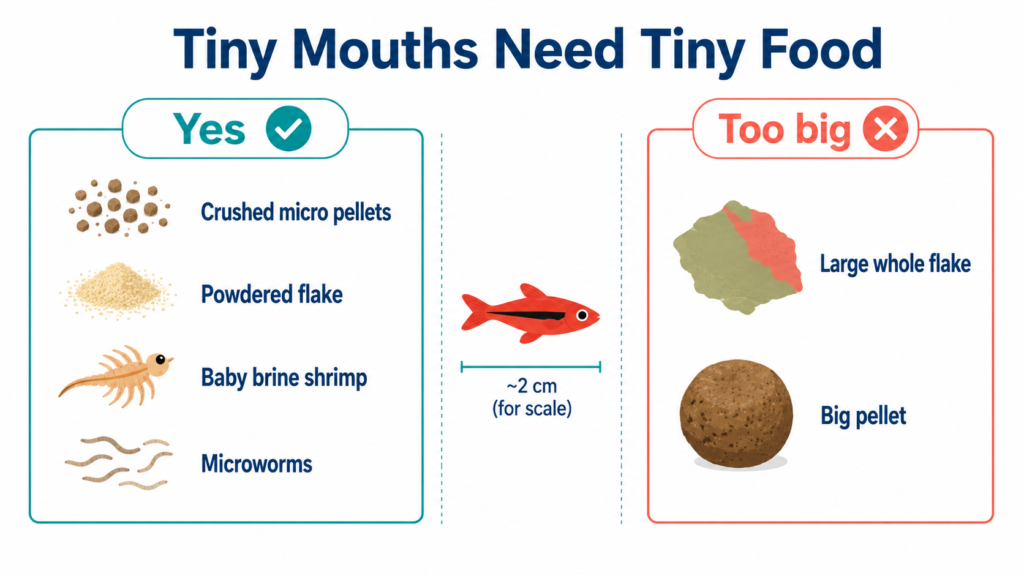
| Adult size | ~0.6–0.8 in (1.5–2 cm) | — | Tiny mouths need tiny food (see below) |
| School size | 8–12 minimum, 15+ ideal | Critical | Color and confidence come from numbers, not gear |
Notice that water preferences are the mirror image of a livebearer’s. Where an Endler’s livebearer wants hard, alkaline water, the chili rasbora wants it soft and acidic. That is why these two popular nano fish are not ideal tankmates despite both being tiny and peaceful.
Tank Size, Maturity, and the Cycle That Comes First
You will see chili rasboras kept in tanks as small as 3 gallons, but a 10-gallon is the realistic minimum for a proper school, and it is not really about swimming room — it is about stability. A larger water volume resists the temperature and chemistry swings that stress such a tiny fish, and it gives you space for the 10-plus school they actually need. If you are choosing a tank, our nano tank size guide comparing 3, 5, and 10 gallon setups walks through the trade-offs.
More than almost any other nano fish, chili rasboras want a mature tank. A tank that has been running for a couple of months has stable biofilm, seasoned plants, and a rock-solid bacterial colony — exactly the buffered environment these fish evolved for. Adding them on day one of a fresh setup is the most common reason a first school fails. Always complete a fishless cycle first; our step-by-step fishless cycling guide covers it, and how long before you can safely add fish sets honest expectations.
| Tank size | Realistic school | Stability | Verdict for chili rasboras |
|---|---|---|---|
| 3–5 gallon | 6–8 (tight) | Swings easily | Possible only in an established, planted, stable tank |
| 10 gallon | 10–15 | Good | The sweet spot for a confident, colorful school |
| 15–20 gallon | 20+ | Excellent | Big schools look stunning and stay rock-stable |
Tip: A heavily planted tank is the best chili rasbora “gear” you are not buying. Dense plants, mosses, and a touch of botanical tannin recreate their blackwater home, which deepens their red and gives them the cover they need to feel safe and come out.
For hardware, keep flow gentle — a sponge or low-flow filter suits weak-swimming nano fish and protects against strong currents that exhaust them. A basic plant light and a heater (most rooms need one to hold the tropical range) round out the list. The full inventory lives in our nano aquarium starter checklist, and dense low-maintenance cover is easy with our picks for the best low-light aquarium plants.
Water, Food, and Daily Chili Rasbora Care
Daily care is steady and light. Small weekly water changes of 10 to 15 percent, temperature-matched and dechlorinated, keep nitrate low without shocking such sensitive fish. Chlorine and chloramine are harmful, so a conditioner is mandatory at every change. Resist the urge to chase a perfect pH with chemicals — the swings do more damage than a stable “imperfect” reading.
Feeding is the most underestimated part of chili rasbora care, and it comes down to one word: size. Their mouths are minuscule, so standard flakes and most pellets are simply too big to eat. Offer crushed micro-pellets, powdered or finely crushed flake, and small live or frozen foods like baby brine shrimp, microworms, and daphnia. Feed a tiny amount once or twice a day, only what disappears in a couple of minutes.
Color is the best health gauge you have. A relaxed, well-fed chili rasbora in a big school glows deep brick-red with a dark lateral stripe. Pale, washed-out fish are telling you something is off — usually too small a group, a new or unstable tank, hard water, or water quality slipping. Treat fading color as an early warning, not a cosmetic quirk.
Tankmates, Color, and Breeding
Because they are so tiny, chili rasboras are eaten by surprisingly small fish, so choose tankmates carefully. The safest option is a species-only tank or a pairing with other nano-sized, peaceful, soft-water species. They coexist beautifully with cherry shrimp — too small to bother adult shrimp, and shrimp share their love of a planted tank. Avoid anything large, fast, or boisterous; a single energetic fish can keep a whole chili school hiding permanently. For a vetted shortlist, see our best nano tank fish for beginners roundup.
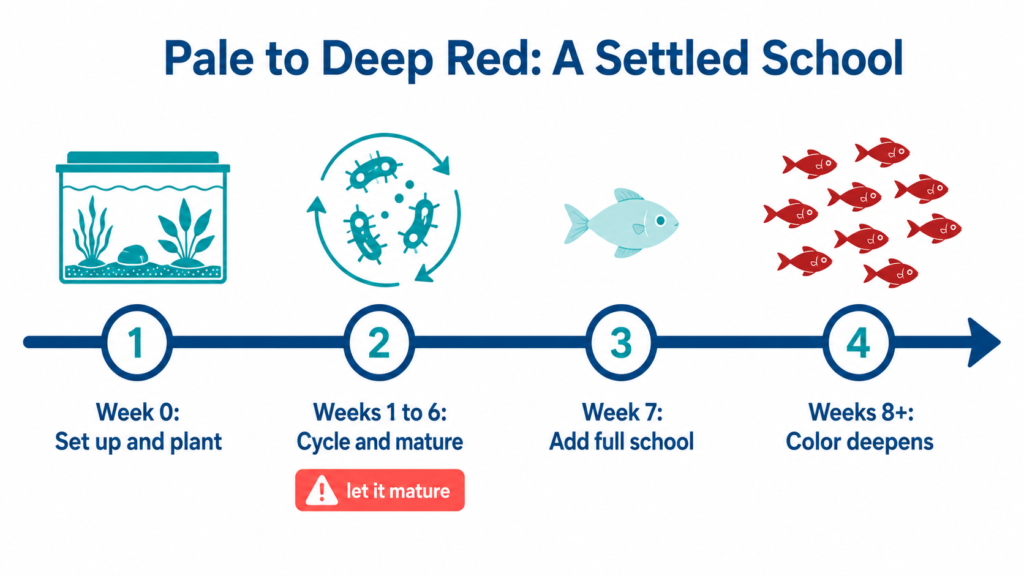
Breeding happens quietly in a mature, planted tank, though it takes effort to raise the fry. Chili rasboras are continuous scatter-spawners: a well-fed group lays a few tiny eggs among fine-leaved plants and moss almost daily, with no parental care. Adults eat the eggs and fry, so in a community tank you will occasionally spot a survivor that grew up in dense moss. To raise numbers deliberately, use a separate, heavily mossed tank and feed the fry infusoria-grade foods. The setup table below sums up the whole journey.
| Stage / week | Action | Target or amount | Rough cost (mid-2026) |
|---|---|---|---|
| Week 0 (shopping) | 10 gal tank, sponge filter, heater, light, dechlorinator, test kit | Soft/acidic water preferred | $80–$140 |
| Weeks 1–6 | Fishless cycle; plant heavily, let the tank mature | Ammonia & nitrite to 0 ppm; biofilm established | $20–$40 (plants) |
| Week 6–8 | Drip-acclimate a full school at once | 10–15 fish; ~45–60 min drip | $30–$60 (fish) |
| Weekly, ongoing | Small water change + micro feeds | 10–15% change; feed 1–2x/day | ~$4/mo (food + conditioner) |
| Weeks 8+ | Watch color deepen; occasional fry in moss | Deep red = thriving | $0 |
For the species itself, the Wikipedia entry on Boraras brigittae is a solid neutral reference on its blackwater origins in Borneo.
Common Beginner Mistakes to Skip
Three errors account for most failed chili rasbora tanks, and all are free to avoid. First, buying too few — a group of three will never color up or feel safe. Second, adding them to a brand-new tank that has not matured, which their tiny bodies cannot withstand. Third, feeding food that is physically too large, so they slowly starve in a tank full of “food.”
- Tiny school — buy 10+ at once; color and boldness come from numbers.
- Immature tank — let it run and cycle for weeks before adding such sensitive fish.
- Oversized food — use crushed micro-pellets, powdered flake, and baby brine shrimp.
- Boisterous tankmates — one bossy fish keeps the whole school hiding.
For the broader patterns that sink first tanks, our 9 beginner aquarium mistakes article is worth a read. Results always vary with your tap water and room temperature, so treat every number here as a target band, not a guarantee.
Keep Exploring NanoTank Lab
- Best Nano Tank Fish for Beginners — where chili rasboras rank among easy nano species.
- How to Cycle a New Aquarium (fishless cycling) — the step these sensitive fish cannot survive without.
- Nano Tank Size Guide (3 vs 5 vs 10 gallon) — pick a footprint that holds a real school.
- Cherry Shrimp Care Guide — an ideal, peaceful tankmate.
- Best Low-Light Aquarium Plants — easy cover that deepens their color.
Frequently Asked Questions
How many chili rasboras should I keep together?
Keep at least 8 to 12, and ideally 15 or more. Chili rasboras are schooling fish that draw confidence and color from numbers. In small groups they stay pale, hide constantly, and are easily stressed. A larger school in a 10-gallon or bigger tank is when they finally show their famous deep-red color and swim out in the open.
Why are my chili rasboras not red?
Pale color almost always means stress, not bad fish. The usual causes are too small a school, a new or unstable tank, hard or alkaline water, or slipping water quality. Increase the group size, keep parameters stable, plant heavily, and consider soft, slightly acidic water. Color typically deepens over a few weeks once they feel secure.
Are chili rasboras good for beginners?
They are beginner-friendly in temperament but not in timing. They are peaceful and small, but their tiny bodies are sensitive to ammonia and unstable water, so they belong in a mature, fully cycled tank rather than a brand-new one. A beginner who waits for the tank to mature and buys a full school will do well.
What do chili rasboras eat?
Tiny foods only. Their mouths are too small for standard flakes and most pellets, so offer crushed micro-pellets, powdered or finely crushed flake, and small live or frozen foods like baby brine shrimp, microworms, and daphnia. Feed a small amount once or twice daily, only what they finish within a couple of minutes.
Can chili rasboras live with shrimp?
Yes — they are one of the best fish for a shrimp tank. Chili rasboras are far too small to harm adult cherry or other dwarf shrimp, and both species thrive in the same heavily planted, stable setup. The only minor overlap is that rasboras may eat the occasional newborn shrimplet, but dense moss gives babies plenty of cover.
What size tank do chili rasboras need?
A 10-gallon is the realistic minimum for a healthy school, mostly for stability rather than swimming room. Their small bodies suffer in the rapid temperature and chemistry swings that small water volumes experience. You can keep a tight group in a well-established, planted 5-gallon, but a 10-gallon or larger gives you the room and stability for the bigger school they need.