
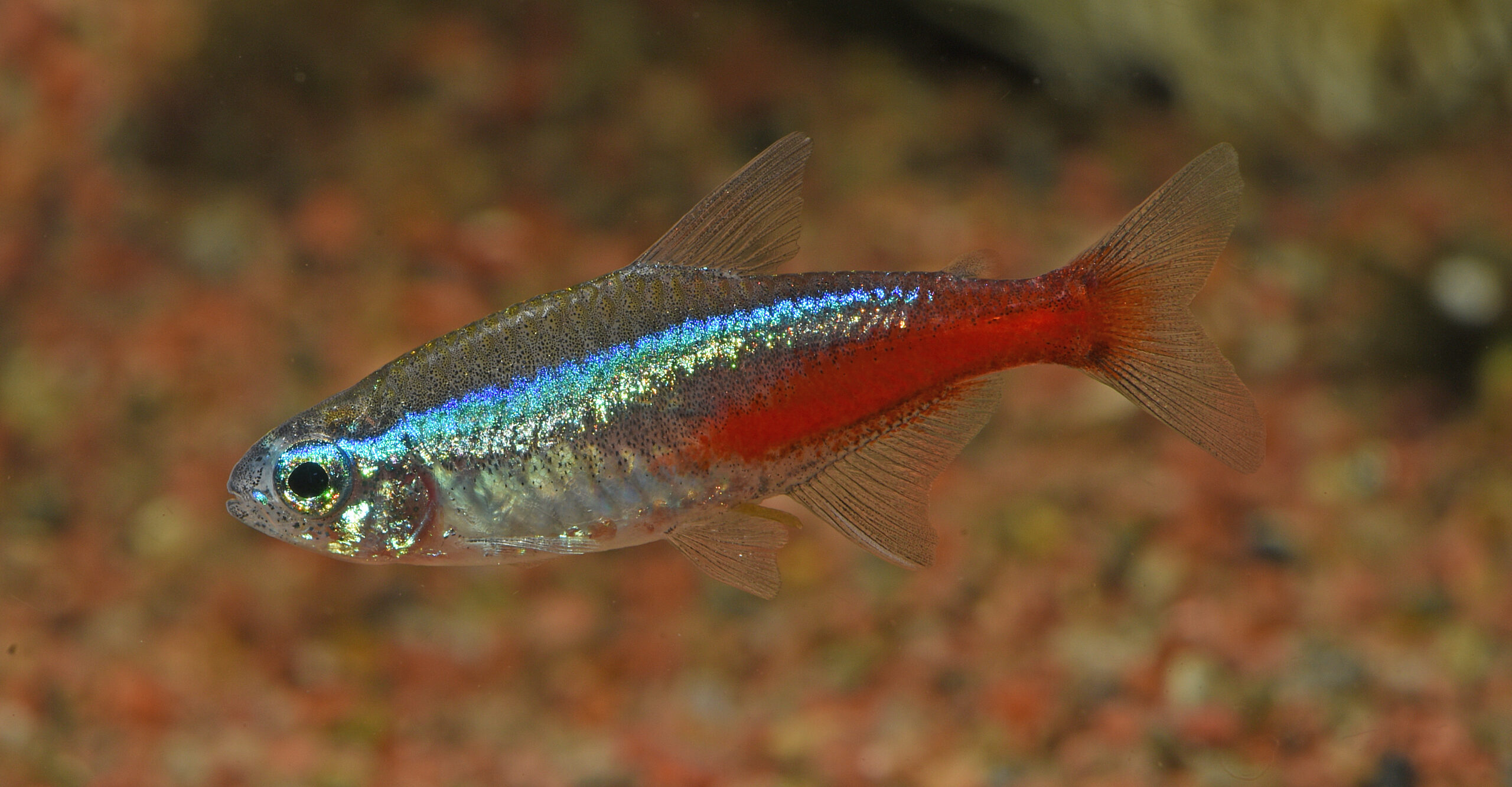
Good neon tetra care starts by retiring a myth that sells a lot of fish: that neons are cheap, disposable “starter” fish you can drop into any bowl. They are hardy once settled, but they are also schooling, soft-water tropicals that fail fast in a brand-new or undersized tank. Get a few specifics right and a shoal of neon tetras becomes one of the most striking, low-drama displays a nano keeper can own.
Most “neon tetra care” articles stop at a vague stat line — “10 gallons, 72–78 °F, peaceful” — and never explain the two things that actually decide success: school size and tank maturity. This guide fills that gap with honest numbers for tank size, water chemistry, real tankmates, and the specific mistakes that turn a $2 fish into a recurring expense.
Neon tetra care at a glance
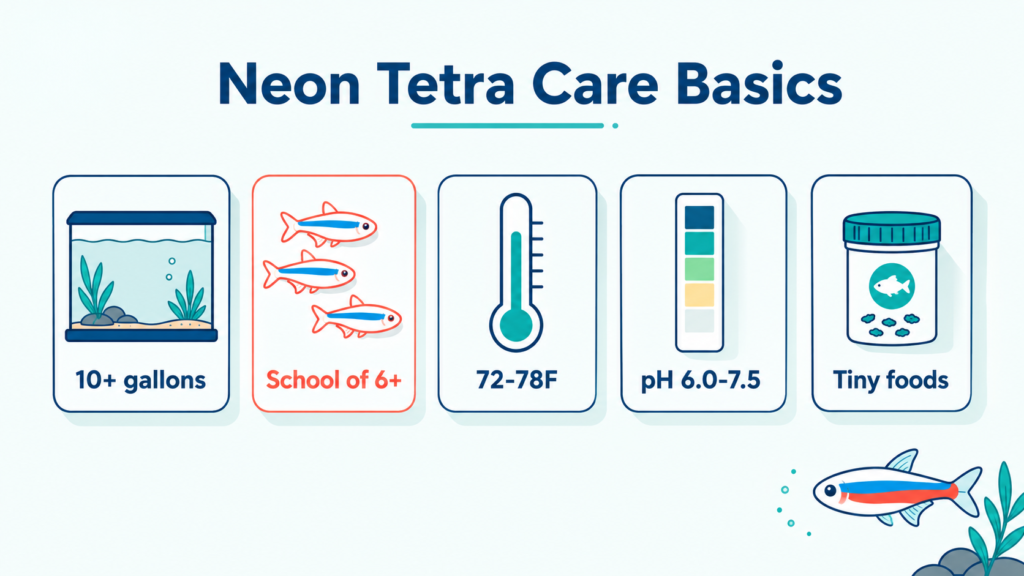
Before the detail, here is the honest care sheet. These are the figures most synthesis articles round off — the ranges below are the ones experienced keepers actually target, not the absolute survival extremes.
| Parameter | Target for neon tetras | Why it matters |
|---|---|---|
| Minimum tank | 10 gallons (38 L) | Room for a real school plus stable water; 5 gal is too small for a group |
| School size | 6 minimum, 8–12 better | Fewer than 6 and they hide, lose color, and nip |
| Temperature | 72–78 °F (22–26 °C) | Tropical, but the cooler end of tropical — heat-loving tankmates can stress them |
| pH | 6.0–7.5, stable | Soft, slightly acidic suits them; stability beats chasing a number |
| Hardness | Soft to moderate — GH up to ~10 dGH (roughly 180 ppm) | They prefer soft water but tolerate moderate hardness once acclimated; very hard water is harder on them |
| Diet | Omnivore micro-feeder | Tiny mouths — needs small flakes/micropellets, not big chunks |
| Adult size | ~1.5 inches (3.8 cm) | Genuinely nano; many tankmate “guides” forget how small they are |
| Lifespan | ~3–5 years | Achievable in a mature, stable tank; far less in a fresh one |
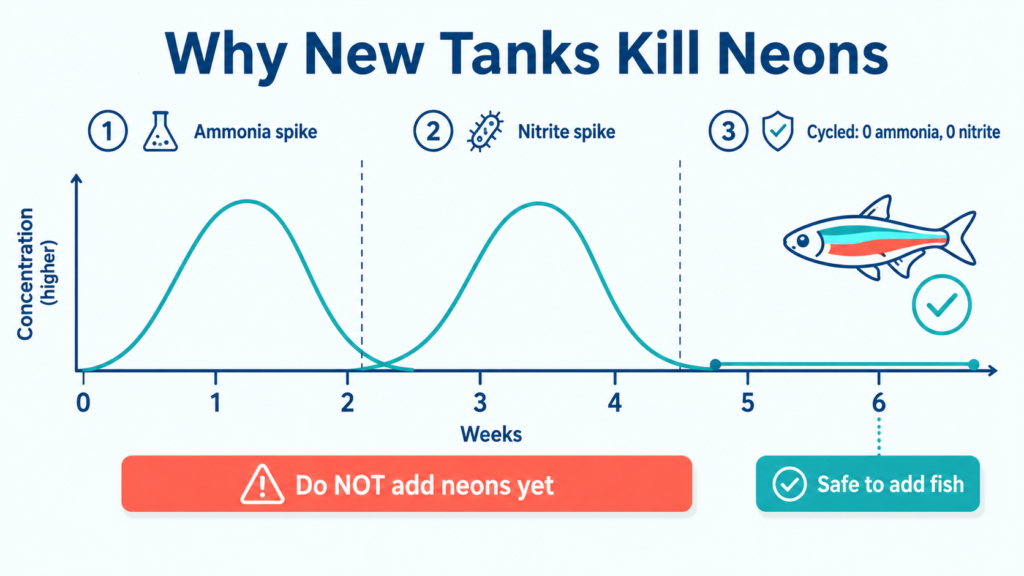
Tip: If you only remember one rule of neon tetra care, make it this — never add neons to a tank younger than about six weeks. They are famously sensitive to the ammonia and nitrite swings of a new, uncycled tank, which is why so many “starter” neons die in week one.
Tank size: why 10 gallons, not 5
A single neon is tiny, so people assume a nano-nano tank is fine. The catch is that neons are not solo fish — a healthy display needs a school of at least six, and a real school of eight to twelve looks far better. That group needs swimming length and enough water volume to stay chemically stable. Ten gallons is the practical floor: it fits a school, holds steady temperature, and forgives small mistakes. A 5-gallon can technically hold a few neons, but the swings come fast and the fish never settle. If you are still picking a tank, our nano tank size guide comparing 3, 5, and 10 gallons walks through exactly why a little more water makes everything easier.
Stocking is the other half of size. Neons are small and lightly built, but a school still adds up. As a rough planted-tank guideline:
| Tank size | Neon tetras (school) | Realistic verdict |
|---|---|---|
| 5 gallons (19 L) | Not recommended | Too small for a proper school; chemistry swings too fast |
| 10 gallons (38 L) | 6–8 | The classic beginner neon tank — one tidy school, room to plant |
| 20 gallons (76 L) | 10–15 | A big, shoaling display; the look neons are famous for |
| 29+ gallons (110+ L) | 15–20+ with tankmates | Community scale; pair with other peaceful nano species |
Water & cycling: the part beginners skip
This is where most neon losses actually happen. Neon tetras come from soft, slightly acidic blackwater streams, and they are unusually sensitive to the ammonia and nitrite spikes of a tank that hasn’t established its bacteria yet. The fix is simple and non-negotiable: cycle the tank fishlessly before a single neon goes in. A cycled tank reads 0 ppm ammonia and 0 ppm nitrite, with nitrate present but kept low by water changes. If you are wondering how long that takes, our guide on how long before you can add fish gives realistic timelines — usually four to six weeks for a fishless cycle, though results vary with temperature and bacteria source.
On chemistry itself: aim for a stable pH between 6.0 and 7.5 and don’t obsess over hitting a perfect number. Modern aquarium neons are tank-bred and tolerate a moderate range, so a steady 7.2 beats a 6.5 that bounces around. Whether neons truly need ultra-soft water is debated; most keepers succeed with ordinary dechlorinated tap water in that hardness band, adding botanicals like leaf litter only if they want the blackwater look.
Schooling: the single biggest neon mistake
Neon tetras are obligate schooling fish, and this is the detail bargain-bin stocking advice gets wrong. Kept in ones and twos, they feel exposed: colors fade, they hide in the back, and stressed individuals start nipping at each other and at tankmates. Kept in a proper group, they relax, color up that famous electric blue-and-red, and shoal together in the open. Six is the bare minimum; eight to twelve is where the behavior really switches on. Buying “just a couple to try” is, paradoxically, the setup most likely to fail — a lone-or-pair neon is a stressed neon. If you want the full beginner-mistake roundup, our list of 9 common beginner aquarium mistakes covers understocking schoolers alongside the other classics.
Tankmates for neon tetras
Neons are peaceful and small, which is both their strength and their vulnerability: the wrong tankmate doesn’t fight them, it eats them. The rule is simple — pair neons only with other calm, similarly sized nano species, and avoid anything with a mouth big enough to treat a 1.5-inch fish as a snack. Here is an honest compatibility guide for a planted community tank. Temperament varies fish to fish, so treat it as a starting point, not a guarantee.
| Tankmate | Verdict | Why |
|---|---|---|
| Other neon tetras | Best choice | Bigger school = better color and calmer behavior |
| Corydoras (pygmy / bronze) | Great | Peaceful bottom-dwellers that ignore mid-water neons |
| Cherry / Amano shrimp | Usually fine | Neons are too small to bother adult shrimp; great cleanup crew |
| Nerite snails | Always fine | Zero conflict, eat algae, no fins to nip |
| Betta | Risky — depends | Some bettas ignore neons, some hunt them; results vary |
| Angelfish / large cichlids | Never | Adult angels famously eat neons; classic beginner mismatch |
| Goldfish | Never | Coldwater, messy, and big enough to swallow neons |
For more vetted small-fish pairings beyond neons, browse our best nano tank fish for beginners. And if a single centerpiece fish appeals more than a school, compare the trade-offs with betta fish care in a nano tank — a very different but equally beginner-friendly route.
Feeding & keeping neons healthy
Neons are omnivores with tiny mouths, so the staple is small — quality micropellets or crushed flakes they can actually swallow, with occasional treats like frozen daphnia, baby brine shrimp, or microworms. Feed a small pinch once or twice a day, only what the school clears in about a minute. Overfeeding is the most common feeding mistake: it bloats the fish and fouls the water, and in a 10-gallon that pollution hits fast. The rest of long-term health is just steady husbandry: weekly partial water changes, stable temperature, gentle filter flow, and live or silk plants for cover so the school feels secure enough to stay out in the open.
Honest caveat: even with perfect care, neons are a hobby fish with mixed sourcing quality, and longevity varies. This guide is about husbandry — water, tank, diet, and tankmates — not diagnosing or treating sick fish. If something looks wrong beyond what clean water and stable conditions fix, consult a knowledgeable aquatic vet or a trusted species resource rather than guessing.
Setting up a neon tetra tank: quick checklist
If you are building a tank specifically for neons, here is the order of operations with rough mid-2026 US costs so there are no surprises. The nano aquarium starter checklist covers the gear in depth; this is the neon-specific sequence.
| Step | What to do | Rough cost (mid-2026) |
|---|---|---|
| 1. Tank + lid | 10-gallon (38 L) with a fitted lid — neons can jump | $25–55 |
| 2. Filter | Gentle filter (sponge or low-flow HOB); neons dislike strong current | $15–35 |
| 3. Heater | 25–50 W heater set to ~75 °F | $15–25 |
| 4. Plants + cover | Live or silk plants so the school feels safe in the open | $10–30 |
| 5. Cycle the tank | Fishless cycle 4–6 weeks to 0 ammonia / 0 nitrite | $5–15 (test kit, ammonia source) |
| 6. Add the school | Buy 6–8 neons at once; acclimate slowly | $2–4 each → $16–32 per school |
All in, a dedicated neon setup lands around $90–180 depending on how much you spend on the tank and aquascape — in line with our broader breakdown of how much a nano aquarium costs. The single biggest money-saver isn’t cheap gear; it’s patience during the cycle, which is what keeps you from re-buying dead fish.
Keep Exploring NanoTank Lab
- How to Set Up a Nano Aquarium — the full first-tank walkthrough before your neons arrive.
- How to Cycle a New Aquarium (fishless cycling) — the step neons are least forgiving about.
- Nano Tank Size Guide (3 vs 5 vs 10 gallon) — why 10 gallons is the neon-friendly floor.
- Best Nano Tank Fish for Beginners — other peaceful species that pair well with a neon school.
- 9 Beginner Aquarium Mistakes — including the understocking trap that ruins schooling fish.
Frequently Asked Questions
How many neon tetras should I keep together?
Keep at least six neon tetras together, and eight to twelve is noticeably better. They are schooling fish, so in small numbers they hide, lose color, and get nippy, while a proper group is calm, colorful, and shoals out in the open.
What size tank do neon tetras need?
A 10-gallon (38 L) tank is the practical minimum for a school of neons. It fits a group of six to eight, holds stable temperature and chemistry, and gives the fish swimming room; a 5-gallon is really too small for a proper school.
Do neon tetras need a heater?
Yes — neon tetras are tropical and need a heater to hold a steady 72–78 °F (22–26 °C). They sit at the cooler end of tropical, so most homes are too cold without one, and a stable temperature matters more than hitting an exact degree.
Why do my neon tetras keep dying?
The most common cause is adding neons to a new, uncycled tank, where ammonia and nitrite spikes overwhelm these sensitive fish. Cycle the tank fishlessly for four to six weeks first, keep a school of six or more, and acclimate slowly — that solves the majority of early losses.
Can neon tetras live with bettas or other fish?
Neons do best with other peaceful nano species like corydoras, shrimp, and snails. Bettas are hit or miss — some ignore neons, some hunt them — and large fish such as angelfish or goldfish should be avoided entirely because they will eat a 1.5-inch neon.
How long do neon tetras live?
Neon tetras commonly live about 3 to 5 years in a mature, stable aquarium, and some live longer with excellent water quality. Lifespan drops sharply in a freshly set-up tank or with poor conditions, and sourcing quality varies, so results differ from one batch of fish to another. For species background, see the neon tetra entry on Wikipedia.