
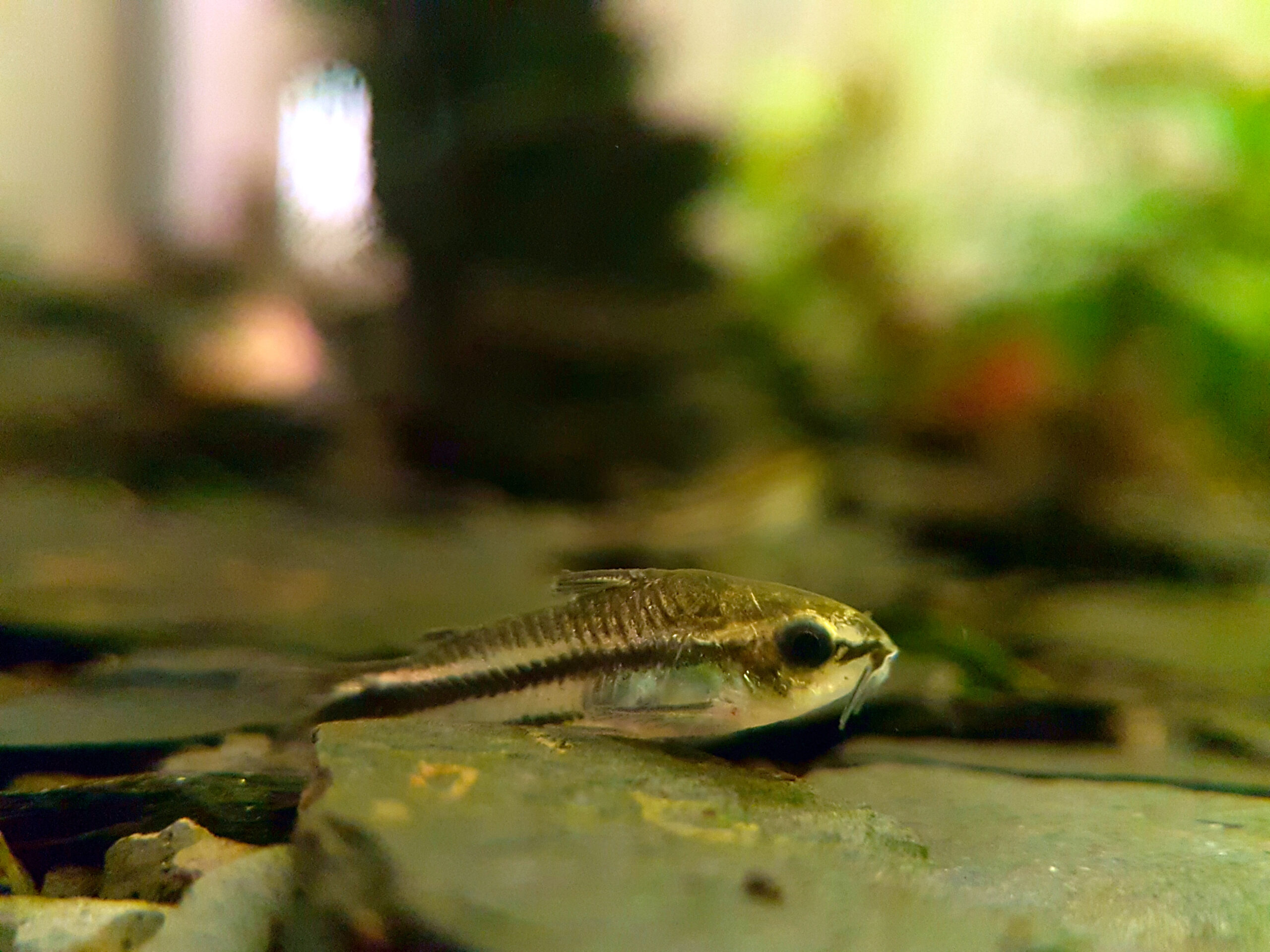
Pygmy corydoras care comes wrapped in two myths that quietly ruin most first attempts. Myth one: cories are bottom-dwelling janitors that clean up after your other fish. Myth two: any gravel is fine. Corydoras pygmaeus breaks both. It is a tiny, charming schooling catfish that spends most of its day swimming in the middle of the tank, and it needs soft sand and its own food to thrive. Get those two things right and few nano fish are more rewarding.
Most pygmy cory guides bury the two facts that actually decide success — group size and substrate — under generic care charts. Kept in small numbers on sharp gravel, these fish hide, damage their delicate barbels, and slowly fade. This guide puts those facts front and center, with honest numbers, three original reference tables, and a realistic setup timeline so your school stays bold, healthy, and out in the open.
Why Pygmy Cories Aren’t the Fish You Think They Are
At roughly 1 to 1.2 inches, the pygmy cory is among the smallest catfish in the hobby, which makes it a genuine nano fish rather than the bulky bottom-feeder people picture. The bigger surprise is behavior: unlike almost every other Corydoras, pygmies spend much of their time shoaling in open mid-water in a tight, coordinated group. That is a feature, not a quirk — it means they are constantly visible and active, but only when kept in a real school.
The “cleanup crew” myth is the other trap. Pygmy cories will scavenge, but they are not janitors and cannot survive on leftovers. They need their own sinking food, every day. Treat them as a featured schooling species, not a maintenance accessory, and they reward you with personality far bigger than their size. The comfort-zone table below sorts the essentials.
| Parameter | Comfortable range | How fussy? | What actually matters |
|---|---|---|---|
| Temperature | 72–78°F (22–26°C) | Forgiving | Stable, moderate tropical; avoid sustained high heat |
| pH | 6.2–7.5 | Adaptable | Slightly soft to neutral is ideal; stability beats target |
| GH (hardness) | Soft to medium (~2–12 dGH) | Adaptable | Tolerates a fair range if changes are gradual |
| Ammonia / Nitrite | 0 ppm | Zero tolerance | Non-negotiable; only a cycled tank passes |
| Nitrate | Below 20 ppm | Sensitive | Keep low with plants and weekly changes |
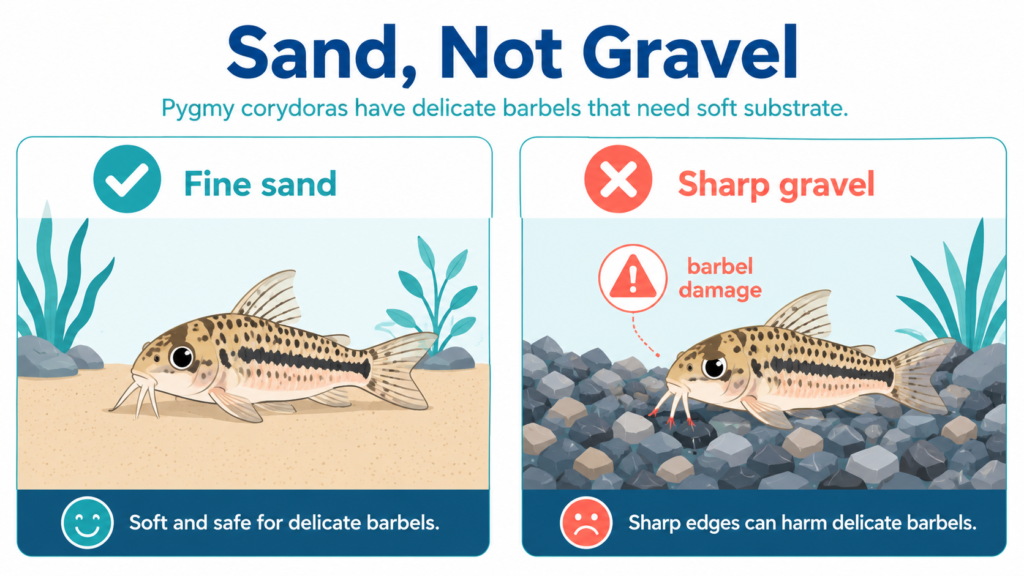
| Substrate | Fine soft sand | Critical | Gravel shreds their barbels — the #1 avoidable injury |
| School size | 8–12 minimum, 10+ ideal | Critical | Small groups hide and stress; big groups swim out front |
The two rows beginners skip are substrate and school size, and they are exactly the two that decide whether you see your fish at all. Everything else on this chart is forgiving by comparison.
Tank Size, Substrate, and the Cycle That Comes First
A small group can technically fit in a 5-gallon, but pygmy cories are shy in tight quarters and a 10-gallon is the realistic minimum for a confident school of 8 to 12. The extra footprint matters more than depth here, because these fish shoal horizontally. If you are choosing a tank, our nano tank size guide comparing 3, 5, and 10 gallon setups covers the trade-offs for stocking a school.
Substrate is non-negotiable: use fine, soft sand. Pygmy cories sift and rest on the bottom with delicate sensory barbels, and sharp or coarse gravel wears those barbels down, leading to infection and an inability to feed properly. This single choice prevents the most common pygmy-cory injury for free. Pair the sand with driftwood and plants for cover, since wild pygmies shelter among submerged roots and leaves.
| Setup choice | Do this | Avoid this | Why |
|---|---|---|---|
| Substrate | Fine soft sand | Sharp/coarse gravel | Protects barbels from wear and infection |
| Tank size | 10 gal+ for a school | 3–5 gal for 8+ | Horizontal shoaling room and stability |
| Filter flow | Gentle sponge or low flow | Strong outflow | Weak swimmers; protects fry too |
| Cover | Plants, driftwood, leaves | Bare tank | Confidence; mimics their habitat |
As with every nano fish, the non-negotiable first step is cycling. A new tank has no bacteria to convert toxic ammonia to safer nitrate, and pygmy cories are too small to survive that gap. Run a fishless cycle first — our step-by-step fishless cycling guide covers it, and how long before you can safely add fish sets realistic timing. The complete gear list lives in our nano aquarium starter checklist.
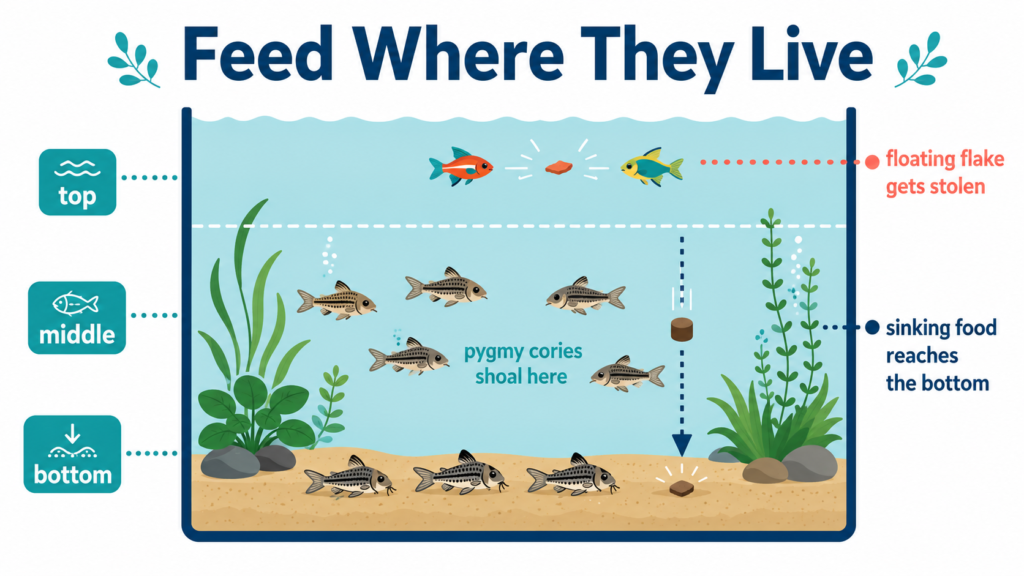
Tip: Drop food where the fish are. Because pygmies feed on the bottom but swim mid-water, a fast-sinking micro-pellet or wafer that reaches the sand beats floating flake that gets eaten up top by tankmates before it ever sinks.
Water, Food, and Daily Pygmy Cory Care
Day-to-day care is simple and consistent. Weekly water changes of 10 to 20 percent, temperature-matched and dechlorinated, keep nitrate low. Sand benefits from a light surface vacuum to lift debris without digging into the bed, where beneficial bacteria live. A water conditioner at every change is mandatory because chlorine and chloramine harm these small fish.
Feeding is easy as long as you actually feed them. Pygmy cories are not picky, but they do need food that reaches the bottom: sinking micro-pellets and wafers form the staple, supplemented with frozen or live baby brine shrimp, daphnia, and microworms for variety and condition. Feed once or twice a day, only what they finish in a few minutes. In a community tank, watch that faster mid-water fish do not intercept everything before it sinks.
One charming behavior worth knowing: pygmy cories occasionally dash to the surface for a quick gulp of air. This is normal. Like other corydoras, they can absorb oxygen through their gut as a backup, so an occasional sprint upward is healthy. Constant, frantic gasping at the surface, however, signals poor water quality — check your parameters.
Tankmates, Behavior, and Breeding
Pygmy cories are peaceful and make excellent community fish, as long as their tankmates are small and gentle. They pair beautifully with other nano species that occupy different water levels, like neon tetras and chili rasboras, and they coexist safely with cherry shrimp (they may eat the occasional shrimplet but ignore adults). Avoid anything large enough to view a 1-inch fish as a snack. For a vetted shortlist, see our best nano tank fish for beginners roundup.
Breeding is achievable for a patient keeper. In a stable, well-fed group, a cool-water change can trigger spawning: females deposit sticky eggs on plants and glass, and the adults provide no care and will eat eggs. To raise fry deliberately, move eggs or adults to a separate tank, keep the water pristine, and feed the fry infusoria, then baby brine shrimp. The table below turns the whole process into a buy-and-do checklist.
| Stage / week | Action | Target or amount | Rough cost (mid-2026) |
|---|---|---|---|
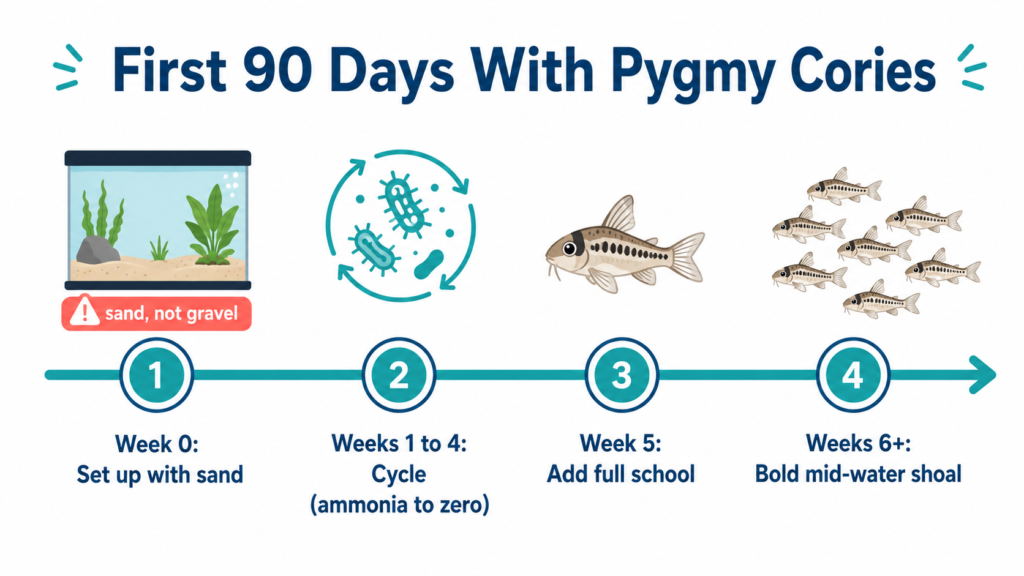
| Week 0 (shopping) | 10 gal tank, fine sand, sponge filter, heater, light, dechlorinator | Sand is mandatory | $80–$140 |
| Weeks 1–4 | Fishless cycle; add plants & driftwood | Ammonia & nitrite to 0 ppm | $20–$40 (plants) |
| Week 4–5 | Drip-acclimate a full school | 8–12 fish; ~45–60 min drip | $30–$60 (fish) |
| Weekly, ongoing | Water change + sinking feeds | 10–20% change; feed 1–2x/day | ~$4/mo (food + conditioner) |
| Optional | Cool water change to trigger spawning | Eggs on plants/glass; move to raise fry | $0 |
For the species itself, the Wikipedia entry on Corydoras pygmaeus is a solid neutral reference on its biology and range in the Amazon basin.
Common Beginner Mistakes to Skip
Three errors account for most disappointing pygmy cory tanks, and all are free to avoid. First, sharp gravel that injures their barbels. Second, too small a group, which leaves them stressed and hidden. Third, treating them as a cleanup crew and never feeding them their own sinking food.
- Gravel substrate — switch to fine soft sand to protect barbels.
- Tiny group — keep 8 or more; they are true schoolers.
- “They’ll eat scraps” — feed sinking pellets and frozen foods daily.
- Big or boisterous tankmates — keep companions small and peaceful.
For the broader patterns that sink first tanks, our 9 beginner aquarium mistakes article is worth a read. Results always vary with your tap water and room temperature, so treat every number here as a target band, not a guarantee.
Keep Exploring NanoTank Lab
- Best Nano Tank Fish for Beginners — where pygmy cories rank among easy nano species.
- How to Cycle a New Aquarium (fishless cycling) — the step these small fish cannot skip.
- Nano Tank Size Guide (3 vs 5 vs 10 gallon) — pick a footprint that holds a school.
- Neon Tetra Care Guide — an ideal mid-water schooling tankmate.
- Cherry Shrimp Care Guide — a peaceful, compatible invertebrate.
Frequently Asked Questions
How many pygmy corydoras should I keep?
Keep at least 8, and ideally 10 or more. Pygmy cories are schooling fish that feel safe and behave naturally only in a real group. In small numbers they hide, stress easily, and rarely come out. A larger school in a 10-gallon or bigger tank is when they shoal confidently in open mid-water, which is the whole reason to keep them.
Do pygmy corydoras need sand?
Yes, fine soft sand is strongly recommended. Pygmy cories use delicate sensory barbels around their mouths to find food on the bottom, and sharp or coarse gravel wears those barbels down, causing infection and feeding problems. Sand protects them and lets them forage naturally. This is the single most important setup choice for their long-term health.
Can pygmy cories live in a 5-gallon tank?
A small group can survive in a 5-gallon, but they tend to be shy and stressed in such tight quarters. A 10-gallon is the realistic minimum because it provides the horizontal swimming room a school needs and the water volume that keeps parameters stable. If a 5-gallon is your only option, keep a small group, plant heavily, and keep the water pristine.
Are pygmy corydoras good algae eaters or cleaners?
No. This is a common myth. Pygmy cories will scavenge stray food, but they are not algae eaters and cannot live on leftovers. They need their own daily sinking food to stay healthy. Think of them as a featured schooling species with personality, not a maintenance crew that cleans up after your other fish.
Why do my pygmy cories swim to the surface?
An occasional quick dash to the surface for a gulp of air is completely normal. Corydoras can absorb oxygen through their gut as a backup, so brief sprints up and down are healthy behavior. However, if they are constantly hanging at the surface gasping, that signals poor water quality or low oxygen — test your parameters and check your filtration.
What can live with pygmy corydoras?
Small, peaceful nano species that occupy different water levels are ideal — neon tetras, chili rasboras, and similar tiny schoolers, plus cherry shrimp. Avoid anything large or aggressive enough to harass or eat a 1-inch fish. Because pygmy cories shoal mid-water and feed on the bottom, they layer nicely with surface and mid-water fish in a peaceful community tank.