Best Shrimp for a Nano Tank: 6 Easy Beginner Picks
The best shrimp for nano tank life is almost always the humble cherry shrimp — but “almost always” hides the one decision that trips up every beginner: matching the shrimp to your water. Some popular shrimp want hard, alkaline water; others demand soft and acidic; and mixing the two groups, or buying the wrong one for your tap water, is the most common reason a first colony fails. Pick the right species for your conditions and dwarf shrimp are some of the most rewarding, low-cost livestock you can keep.
Most “best shrimp” lists just rank species by looks and never explain the water-chemistry split that actually determines success. This guide leads with that, ranks six beginner-to-advanced shrimp by how nano-friendly they really are, and backs it with three original reference tables and an honest buying checklist — so you choose a shrimp that thrives in your tank instead of one that slowly disappears.
The One Decision: Neocaridina vs Caridina Water
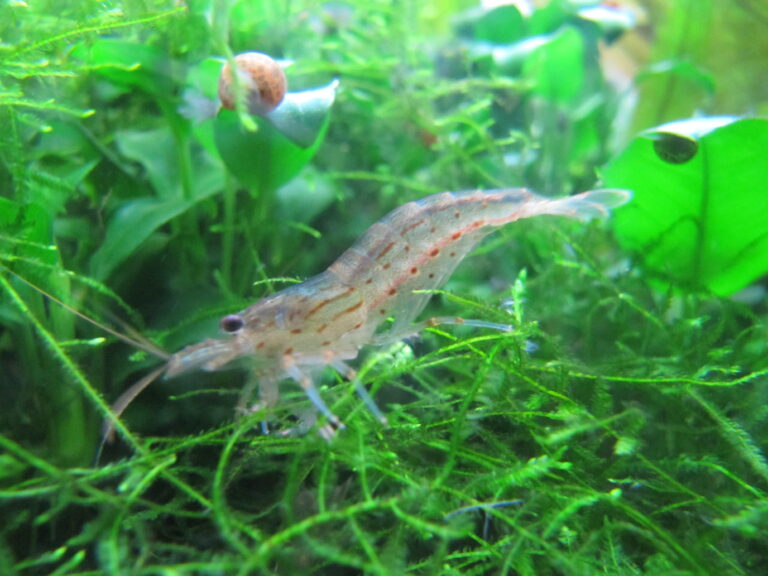
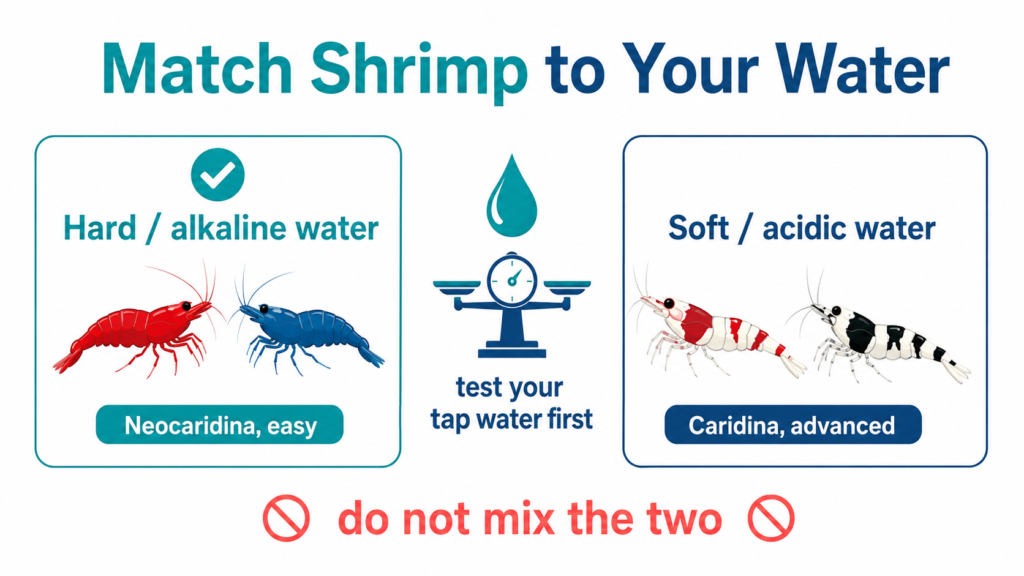
Before any species ranking, understand the split that runs through the whole hobby. Neocaridina shrimp (cherry, blue dream, yellow) want hard, slightly alkaline water and are famously forgiving. Caridina shrimp (crystal red, bee shrimp) want soft, acidic water and are far fussier. Amano shrimp are technically Caridina but unusually adaptable. Test your tap water first, then choose the group that matches it — that single step prevents most beginner failures.
| Factor | Neocaridina (beginner) | Caridina (advanced) |
|---|---|---|
| Examples | Cherry, blue dream, yellow, green | Crystal red, black bee, tiger |
| pH | ~7.0–7.6 (hard, alkaline) | ~6.2–6.9 (soft, acidic) |
| Water needs | Plain hard tap water often works | Usually needs RO + remineralizer + active substrate |
| Difficulty | Easy | Demanding |
| Breeds in freshwater? | Yes, readily | Yes, but needs precise parameters |
The practical takeaway: if you have hard tap water and want easy success, keep Neocaridina. If you have soft water (or are willing to manage RO water and active substrate) and want a challenge, Caridina is for you. Avoid mixing the two in one tank — their water needs conflict, and many Neocaridina and Caridina can also interbreed into dull offspring.
The 6 Best Shrimp for a Nano Tank, Ranked
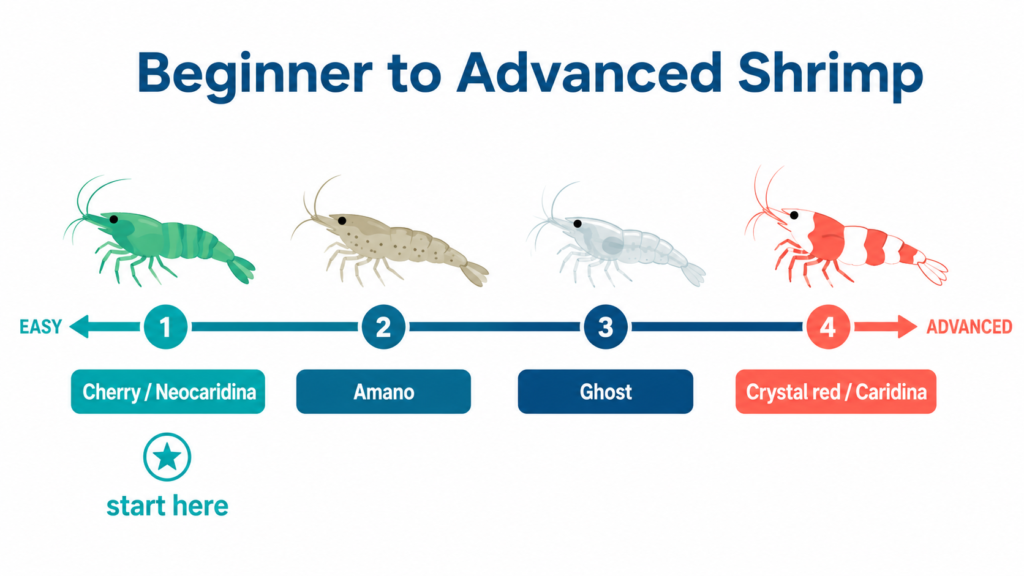
With the water question settled, here are six shrimp ranked by how well they suit a beginner’s nano tank. The first two are the easy wins; the rest climb in difficulty or outgrow the smallest tanks.
| Shrimp | Adult size | Difficulty | Water | Best for |
|---|---|---|---|---|
| Cherry (Neocaridina) | ~1 in | Easy | Hard/alkaline | The default best beginner shrimp |
| Other Neocaridina morphs | ~1 in | Easy | Hard/alkaline | Same care, different colors (blue, yellow) |
| Amano (Caridina) | ~1.5–2 in | Easy–moderate | Adaptable | Best algae eater; won’t breed in freshwater |
| Ghost shrimp | ~1.5 in | Easy | Adaptable | Cheap, but can nip; short-lived |
| Crystal red / bee (Caridina) | ~1 in | Advanced | Soft/acidic | Stunning, for experienced keepers |
| Bamboo / filter shrimp | ~2–3 in | Moderate | Needs flow | Filter feeder; better in larger tanks |
For most people, the answer is the cherry shrimp: hardy, colorful, cheap, and a prolific breeder that turns a small starter group into a self-sustaining colony. Other Neocaridina color morphs (blue dream, yellow, green) are identical in care. If algae is your goal, add a few Amano shrimp — the hobby’s best algae eaters — but note they cannot breed in a home tank, since their larvae need brackish water. Our full cherry shrimp care guide goes deep on the easiest option.
The lower half of the list comes with caveats. Ghost shrimp are cheap and hardy but vary in species, can be semi-aggressive, and tend to be short-lived. Crystal red and bee shrimp are gorgeous but demand soft, acidic, RO-based water and stable parameters — not a beginner project. Bamboo (filter) shrimp are fascinating but need steady flow and more space than the smallest nanos provide.
Tip: Whatever shrimp you choose, copper is the silent killer. Many “general” fish medications and some plant fertilizers contain copper, which is toxic to all invertebrates. Always check labels before dosing a shrimp tank.
Tank Setup, Tankmates, and Buying
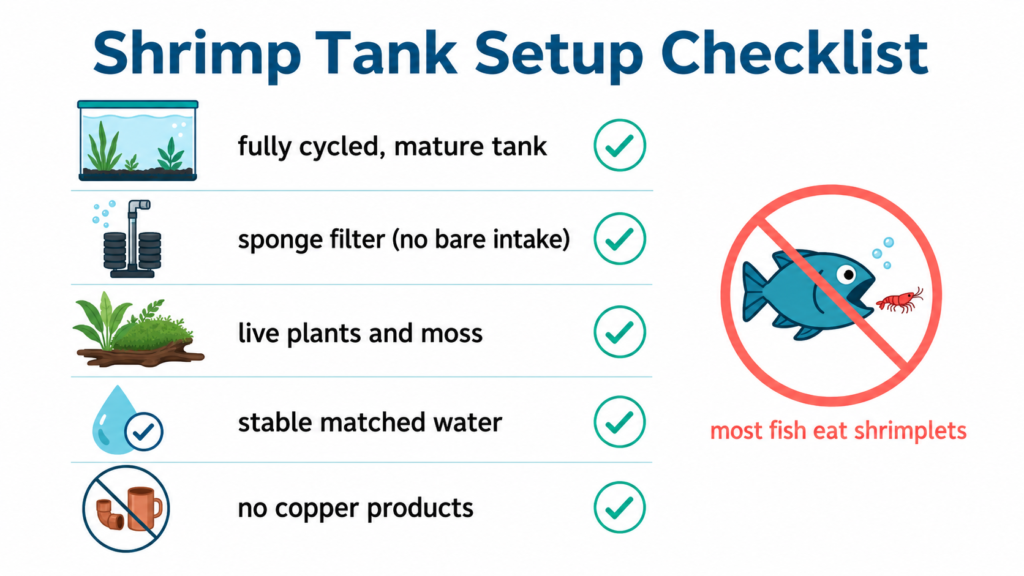
Shrimp keeping is cheap, but two rules matter. First, the tank must be fully cycled and ideally mature — shrimp are sensitive to ammonia and thrive on the biofilm of an established, planted tank. Run a fishless cycle first using our step-by-step fishless cycling guide. Second, never use a bare filter intake; a sponge filter or pre-filter sponge protects baby shrimp. A 5-gallon comfortably starts a colony, though our nano tank size guide explains why a 10-gallon is even more stable.
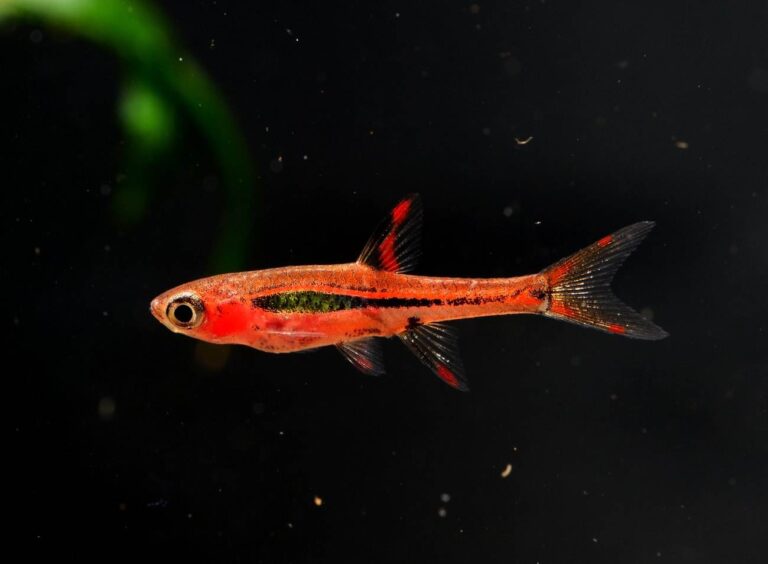
Plant heavily — mosses like java moss give shrimplets cover and graze. For tankmates, the safest tank is shrimp-only, since most fish eat shrimplets. If you want fish, choose tiny, peaceful species like chili rasboras, and see our best nano tank fish roundup for shrimp-tolerant options. The checklist table below turns this into a buy-and-do plan.
| Stage / week | Action | Target or amount | Rough cost (mid-2026) |
|---|---|---|---|
| Week 0 (shopping) | 5–10 gal tank, sponge filter, light, dechlorinator, GH/TDS test | Match shrimp to your water | $60–$120 |
| Weeks 1–4 | Fishless cycle; plant heavily incl. moss | Ammonia & nitrite to 0 ppm | $15–$30 (plants) |
| Week 4–5 | Drip-acclimate first group | 8–10 shrimp; ~2 hr drip | $20–$45 (shrimp) |
| Weekly, ongoing | Small water change + tiny feeds | 10–20% change; feed 2–3x/week | ~$3/mo |
For background on the most popular beginner species, the Wikipedia entry on Neocaridina davidi is a solid neutral reference on its biology and color forms.
Keep Exploring NanoTank Lab
- Cherry Shrimp Care Guide — a full deep-dive on the best beginner shrimp.
- Best Nano Tank Fish for Beginners — shrimp-safe fish to pair them with.
- How to Cycle a New Aquarium (fishless cycling) — the step shrimp cannot survive without.
- Chili Rasbora Care Guide — an ideal, shrimp-friendly tankmate.
- Java Moss Care & Uses — the best cover and grazing surface for shrimplets.
Frequently Asked Questions
What is the best shrimp for a nano tank beginner?
The cherry shrimp (a Neocaridina) is the best shrimp for a nano tank beginner. It is hardy, tolerates a wide range of water, breeds readily without special effort, comes in many colors, and is inexpensive. As long as your tank is cycled and you avoid copper, a small starter group reliably grows into a self-sustaining colony.
Can I keep different shrimp species together?
It depends. You can mix shrimp that share water needs and won’t interbreed into dull colors — for example, Amano shrimp with cherry shrimp. Avoid mixing Neocaridina with Caridina, since their water requirements conflict, and avoid mixing different color morphs of the same species, which produces wild-type brown offspring within a generation or two.
How many shrimp can I start with in a 5-gallon?
Start with about 8 to 10 shrimp in a cycled 5-gallon. That is enough for genetic diversity and a quick-breeding colony without overloading a small, freshly cycled tank. Neocaridina shrimp multiply fast, so resist buying more than your tank can support; the population will climb on its own within a couple of months.
Do shrimp clean the tank?
Partly. Shrimp graze algae, biofilm, and leftover food, which helps keep a tank tidy, and Amano shrimp in particular are excellent algae eaters. But they are not a substitute for water changes, filtration, or cycling, and they still need their own food in a clean tank. Think of them as helpful grazers, not a cleanup crew.
Why do my shrimp keep dying?
The usual causes are an uncycled tank, copper exposure, water that is too soft (failed molts), or large, fast water changes that shock them. Confirm ammonia and nitrite are zero, check that no medications or fertilizers contain copper, keep general hardness in range, and make water changes small and temperature-matched. Match the species to your water chemistry as well.
Are Amano shrimp better than cherry shrimp?
They serve different goals. Amano shrimp are larger, longer-lived, and the best algae eaters, but they cannot breed in freshwater, so the group never grows. Cherry shrimp are smaller and less aggressive algae grazers, but they breed readily and come in vivid colors. Many keepers run both: cherries for color and a self-sustaining colony, Amanos for algae control.