Best Floating Aquarium Plants for Nano Tanks (2026)
The best floating aquarium plants do three jobs at once in a nano tank: they soak up excess nutrients that would otherwise feed algae, they cast soft shade and dangle roots that fish and shrimp love, and they look beautiful doing it. But floaters come with a catch nobody warns beginners about — one popular “plant” is nearly impossible to remove once it gets in, and a few others are restricted from shipping to certain states. Choose wisely and floaters are the easiest win in planted-tank keeping.
Most floating-plant lists just name pretty species and skip the practical realities: which ones take over, which ones need strong light to show color, how much surface to leave open, and the duckweed trap. This guide ranks the best floating aquarium plants for nano tanks, flags exactly what to avoid, and backs it with three original reference tables so your surface garden enhances the tank instead of smothering it.
Why Floating Plants Are a Nano-Tank Superpower
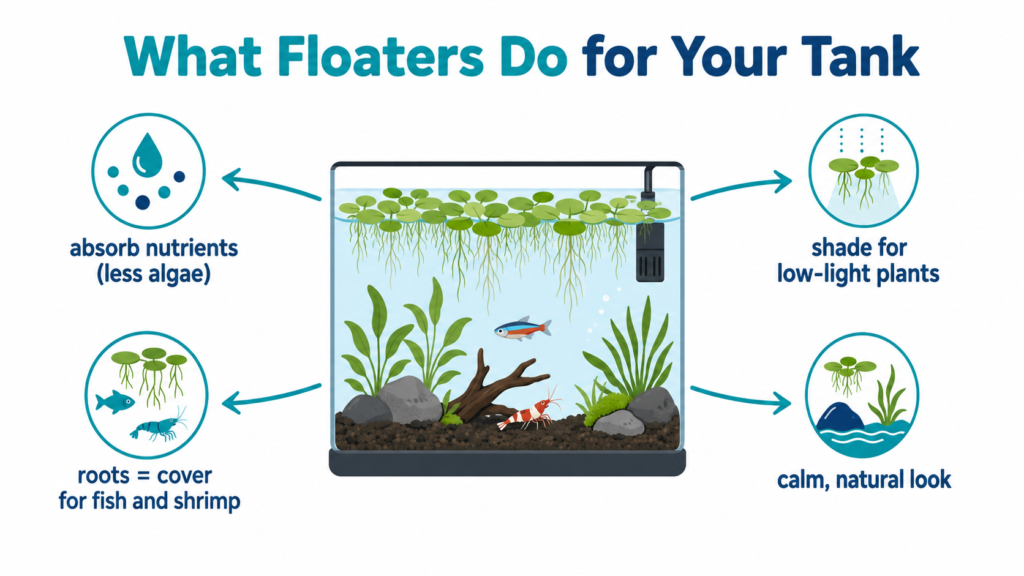
Floating plants have access to unlimited atmospheric CO2, so they grow fast and pull nutrients straight out of the water column — which is exactly why they are such effective algae fighters. In a small, easily-imbalanced nano tank, that nutrient export is hugely valuable. Their trailing roots also provide cover for shy fish, foraging grounds for shrimp, and spawning sites for bubble-nesters, while the shade they cast suits low-light plants and calms skittish species.
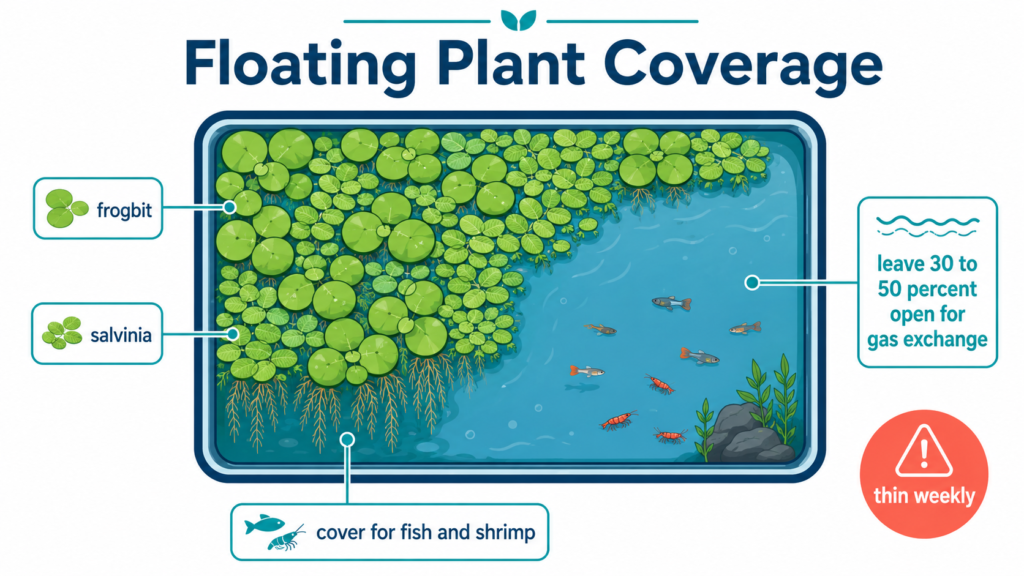
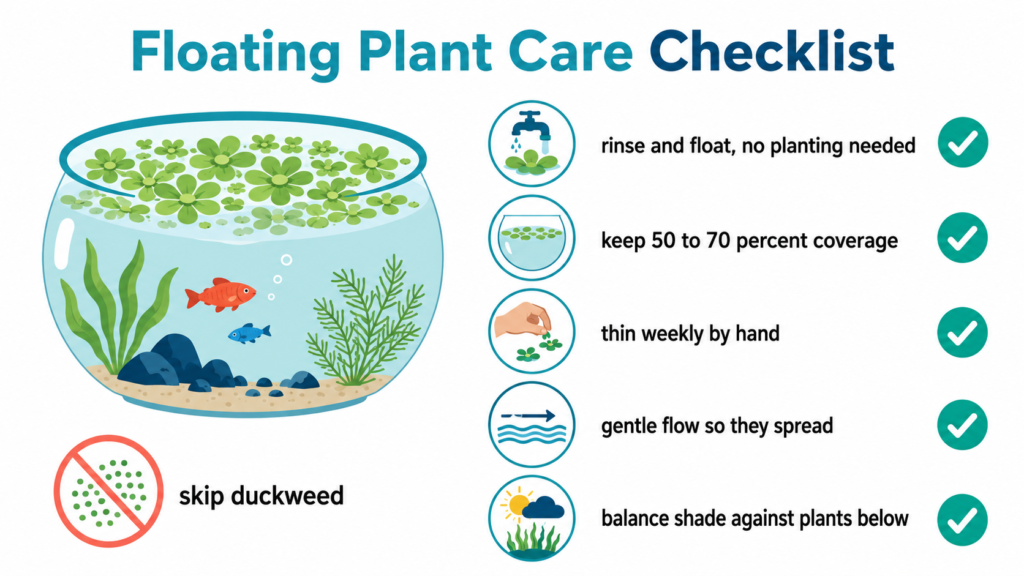
The trade-off is management. Left unchecked, fast floaters blanket the surface, block light to plants below, and reduce gas exchange. The rule of thumb is to keep floaters to roughly 50 to 70 percent surface coverage and thin them weekly. With that one habit, the benefits far outweigh the upkeep. The comparison table below ranks the best options.
| Plant | Growth speed | Light need | Difficulty | Watch out for |
|---|---|---|---|---|
| Amazon frogbit | Moderate | Low–medium | Easy | Large leaves; shipping banned to CA, WA |
| Red root floater | Slow–moderate | Medium–high | Easy–moderate | Needs strong light to turn red |
| Salvinia / water spangles | Fast | Low–medium | Easy | Spreads quickly; thin often |
| Dwarf water lettuce | Fast | Medium | Easy | Long roots; banned to several states |
| Duckweed | Very fast | Any | Easy to grow, hard to remove | Avoid — nearly impossible to eradicate |
The Top Picks (and the One to Avoid)
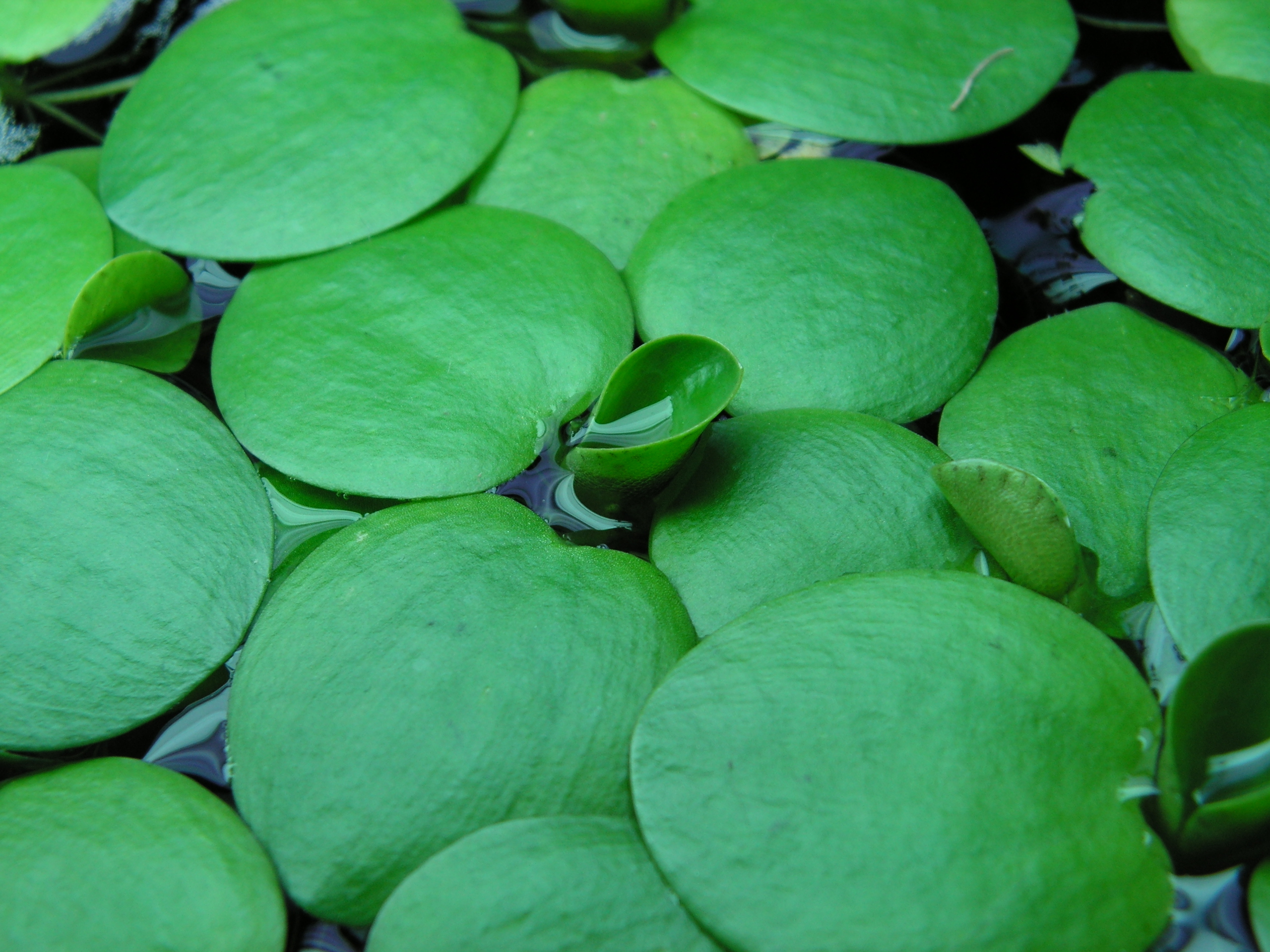
Amazon frogbit is the best all-around floater for most nano tanks: attractive round leaves, lush trailing roots, and a manageable growth rate. Red root floaters are the showpiece — under strong light their leaves and roots blush deep red — but they stay pale and grow slowly in dim tanks. Salvinia and water spangles are fast, fuzzy-leaved nutrient sponges, ideal for tanks fighting algae or carrying a heavy bioload, as long as you thin them regularly.
Then there is duckweed, the one to avoid. It is a fantastic nutrient exporter, but it is tiny, multiplies explosively, gets sucked into filters, and clings to every net and hand — once established, it is famously almost impossible to fully remove. Unless you specifically want it as fish food in a dedicated tank, keep it out. The keep-vs-avoid table makes the call clear.
| If your goal is… | Best floating plant | Why |
|---|---|---|
| Easy all-rounder | Amazon frogbit | Good looks, manageable growth, great roots |
| Color & aesthetics | Red root floater | Stunning red under strong light |
| Maximum algae control | Salvinia / water spangles | Fast nutrient uptake |
| Shade for shy fish | Dwarf water lettuce | Big leaves, long protective roots |
| Set-and-forget simplicity | Avoid duckweed | Impossible to remove once introduced |
One more practical note: several floaters (frogbit, water lettuce, water spangles) are classified as invasive in parts of the United States and cannot be legally shipped to certain states such as California, Washington, Texas, and Florida. Buy from a seller who knows the restrictions, and never release any aquarium plant into the wild.
Tip: A small floater downside is that long roots can become a net for stringy hair algae. If you see it tangling in the roots, trim the worst roots and address the underlying nutrient or light imbalance.
Adding and Managing Floaters
Floaters are the easiest plants to add: just rinse them and set them on the water surface. They need no substrate and minimal care, though they appreciate the nutrients in a stocked, established tank. They pair beautifully with surface-dwelling and shy fish — a betta will rest among the roots, and a honey gourami uses them for cover and bubble nests. For the bigger design picture, see our nano aquascaping ideas guide.
Two cautions for nano tanks. First, strong filter flow pushes floaters into a corner where they pile up and rot — a gentle filter keeps them spread out. Second, floaters shading the tank can starve light-hungry plants below, so balance them against your low-light plants and carpets. The management checklist below keeps it simple.
| Task | How often | Why it matters |
|---|---|---|
| Thin/scoop excess floaters | Weekly | Keeps light and gas exchange open |
| Check roots for hair algae | Weekly | Catch tangles early |
| Wipe floaters off filter intake | As needed | Prevents clogs and rot piles |
| Top off evaporated water | As needed | Floaters dislike condensation burns from a hot lid |
For background on the most popular floater, the Wikipedia entry on Amazon frogbit (Limnobium laevigatum) is a solid neutral reference on its biology and invasive range.
Keep Exploring NanoTank Lab
- Nano Aquascaping Ideas — design styles that use floaters well.
- Best Low-Light Aquarium Plants — what grows under the shade of floaters.
- Java Moss Care & Uses — another easy, beginner-proof plant.
- Do Aquarium Plants Need CO2? — why floaters grow so fast without it.
- Betta Fish Care in a Nano Tank — a fish that loves floating-plant roots.
Frequently Asked Questions
What is the best floating plant for a nano tank?
Amazon frogbit is the best all-around floating plant for most nano tanks. It has attractive round leaves, lush roots that fish and shrimp love, a manageable growth rate, and it tolerates low to medium light. For color, red root floater is stunning under strong light, and for maximum algae control, fast-growing salvinia is excellent.
Do floating plants help with algae?
Yes. Floating plants grow quickly using unlimited atmospheric CO2 and pull nutrients like nitrate and phosphate straight out of the water, starving algae of the fuel it needs. They also shade the tank, which further discourages algae. Just keep them to 50 to 70 percent coverage and watch that hair algae does not tangle in their long roots.
Why should I avoid duckweed?
Duckweed grows and multiplies so fast that it quickly covers the entire surface, and it is nearly impossible to remove completely. The tiny fronds get sucked into filters, stick to nets and hands, and regrow from a single leaf. Unless you want it as live fish food in a dedicated tank, keep duckweed out of your display tank entirely.
How much surface should floating plants cover?
Aim for roughly 50 to 70 percent coverage and thin them weekly. That leaves enough open surface for gas exchange and for light to reach plants growing below, while still delivering the nutrient export, shade, and cover that make floaters worthwhile. Full coverage can block oxygen exchange and starve your rooted plants of light.
Do floating plants need fertilizer or special light?
Most floaters thrive on the nutrients already in a stocked tank and grow under modest light, so they rarely need extra fertilizer. The exception is color: red root floater only turns red under strong light, staying green otherwise. A little liquid fertilizer can help in a lightly-stocked tank, but in most nano setups floaters grow well with no special inputs.
Are floating plants legal to buy and ship?
Most are, but several popular floaters are classified as invasive in parts of the United States and cannot be shipped to certain states. Frogbit, water lettuce, and water spangles face restrictions in states like California, Washington, Texas, and Florida. Buy from a seller who follows these rules, and never release aquarium plants into natural waterways.