
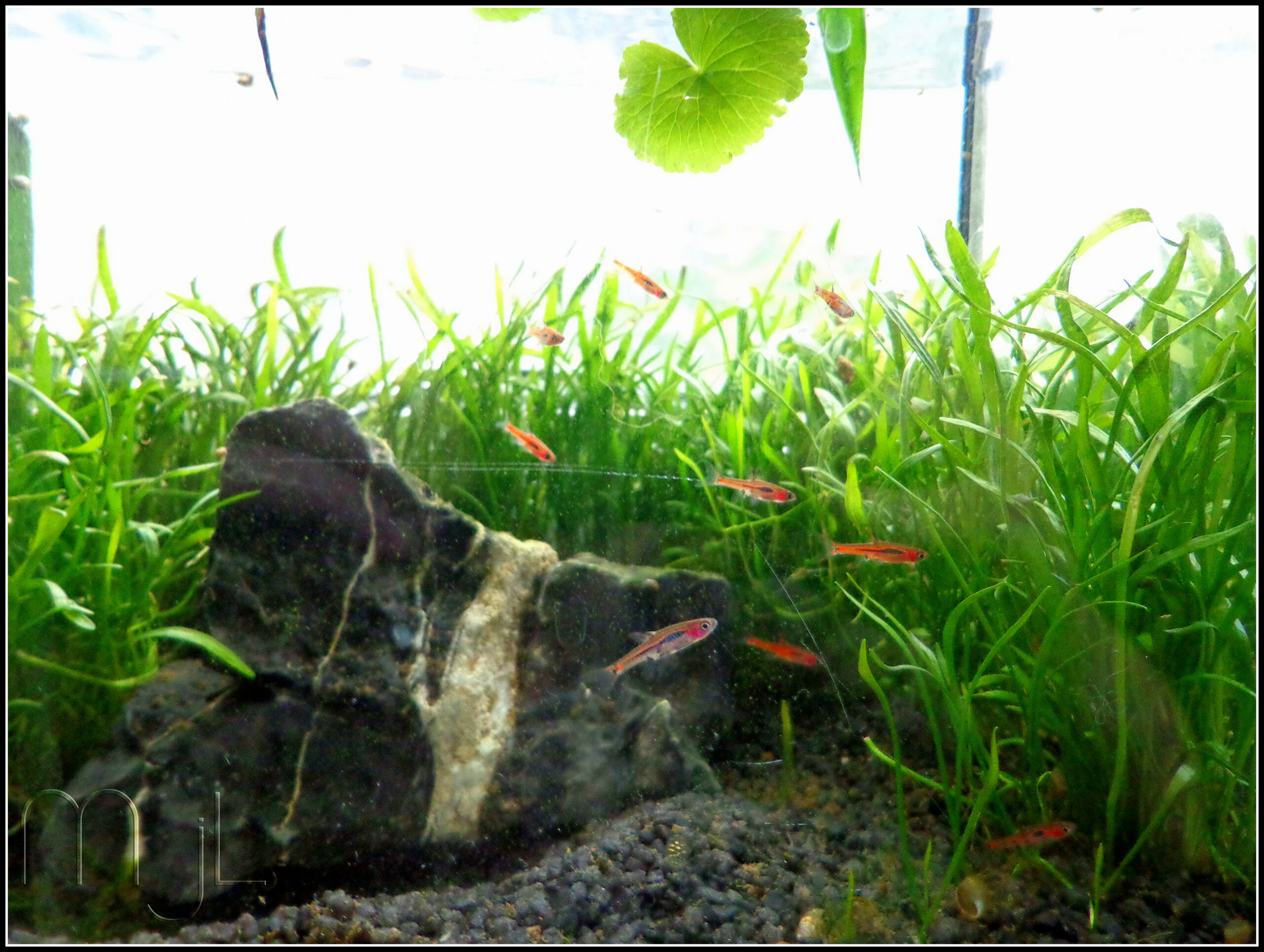
A nano tank heater is one of those purchases beginners agonize over, and the honest answer is: it depends. Whether you need one comes down to two things — the fish you want to keep and how warm your room stays. Tropical fish need stable heat; some cool-water species and a warm home can skip it entirely. The trickier issue is that a small water volume heats and cools fast, so getting the heater decision right (and sized correctly) matters more in a nano tank than in a big one.
Most guides give a blanket “yes, buy a heater” and never explain when you can safely skip one, how to size the wattage, or why an oversized heater is actually dangerous in a small tank. This guide answers all three with honest numbers, three original reference tables, and the nano-specific risks nobody mentions — so you heat your tank correctly instead of cooking or chilling your fish.
Do You Actually Need a Nano Tank Heater?
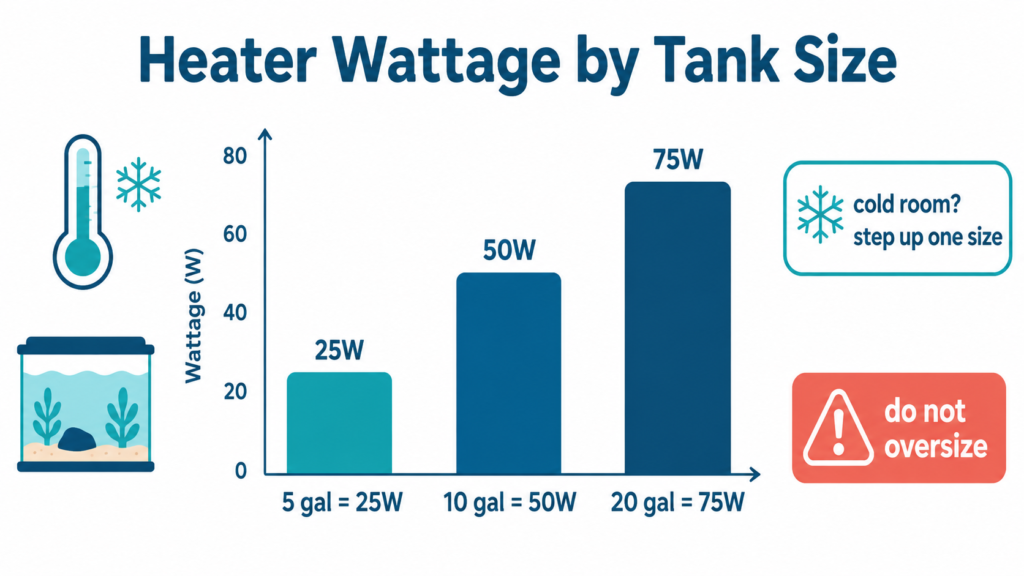
The deciding factor is the gap between your room temperature and your fish’s preferred temperature. Most popular tropical fish — bettas, gouramis, neon tetras — want water around 76 to 80°F (24 to 27°C). If your room sits well below that, you need a heater to bridge the gap and, more importantly, to hold it stable. If you keep cool-water species or your room reliably stays warm, you may not need one at all.
This is really the same coldwater-versus-tropical decision covered in our coldwater vs tropical nano tank comparison. Cool-water options like white cloud mountain minnows and many shrimp thrive at room temperature, while celestial pearl danios actually prefer cooler water and often need no heater in a normal room. The matrix below makes the call.
| Your situation | Heater? | Notes |
|---|---|---|
| Tropical fish, normal/cool room | Yes | Needed to reach and hold ~76–80°F |
| Tropical fish, warm room (stays 76°F+) | Optional | A heater still buffers against swings |
| Cool-water fish (e.g. white clouds) | Often no | Thrive at room temperature |
| Shrimp-only (Neocaridina) | Often no | Comfortable at typical room temps |
| Cold or swingy room | Yes | Stability matters more than the target number |
Sizing the Wattage (Bigger Isn’t Better)
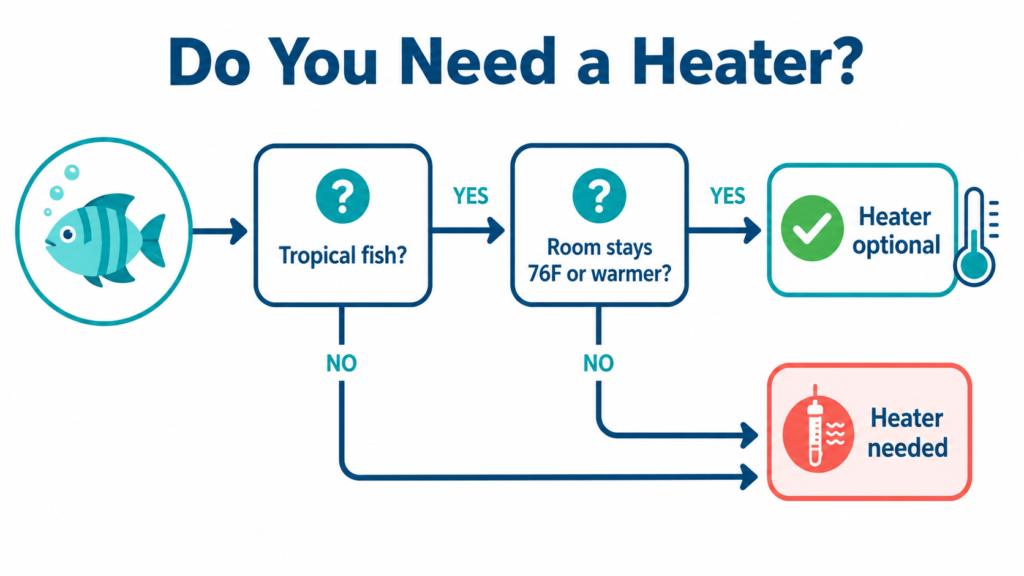
The classic rule is roughly 5 watts per gallon, but in a nano tank that math gets small fast — and that is exactly the point. A 5-gallon needs only about a 25-watt heater in a normal room. Crucially, you should not oversize: in a small volume, a too-powerful heater that sticks “on” can overheat and cook the tank in hours. A right-sized heater with a reliable thermostat is far safer than a big one.
Room temperature shifts the math. The colder your room, the harder the heater works to raise the water, so a cold room may need a step up in wattage. The sizing table below gives sensible nano starting points.
| Tank size | Normal room | Cold room | Note |
|---|---|---|---|
| 3–5 gallon | 25 W | 25–50 W | Use a small preset or nano heater |
| 10 gallon | 50 W | 75 W | Adjustable heater recommended |
| 15–20 gallon | 50–75 W | 100 W | Consider two smaller heaters for safety |
Tip: A heater without a thermometer is flying blind. Built-in heater dials are often inaccurate, so always run a separate, cheap aquarium thermometer and trust it over the heater’s setting.
For very small tanks, preset (non-adjustable) nano heaters lock to a fixed temperature around 78°F and are simple and safe. Adjustable heaters give you control for species with specific needs but require you to set and verify the temperature. Either works; the key is reliability and a separate thermometer.
Nano-Specific Risks and Setup
Small volumes are unforgiving, so a few habits prevent disaster. Place the heater near the filter flow so heat distributes evenly instead of pooling. Let a newly installed heater sit unplugged for 15 to 30 minutes to equalize before powering on, which protects the glass. And never run a heater dry during a water change — unplug it first, since exposed heaters can crack or overheat. These basics belong in every build; see our nano aquarium setup guide and starter checklist.
Match the temperature to your specific fish, too. A betta wants steady warmth around 78°F, while shrinking your heating needs is one reason cool-water and shrimp tanks are so beginner-friendly. The do’s-and-don’ts table below sums up safe heating.
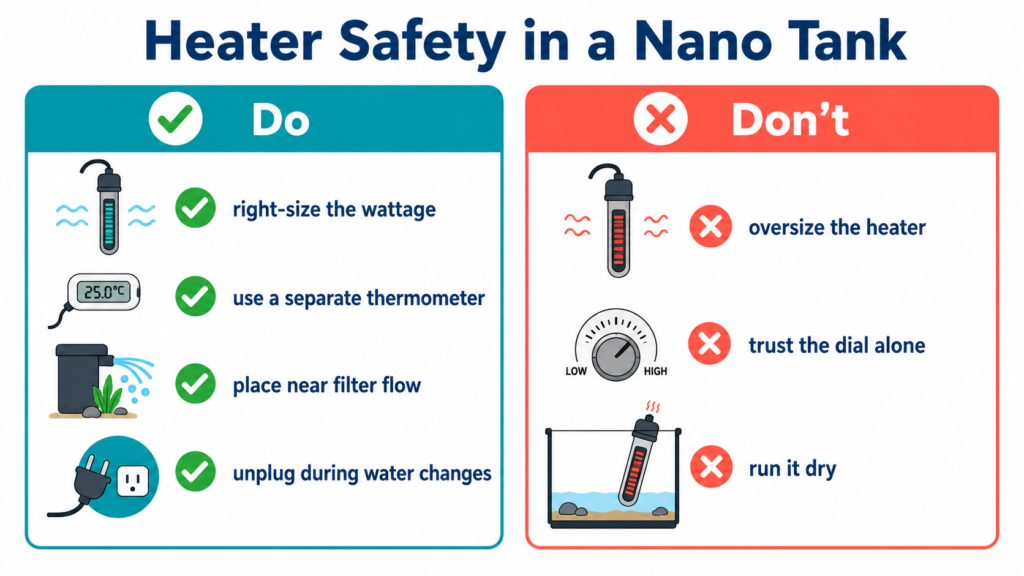
| Do | Don’t |
|---|---|
| Right-size wattage to tank and room | Oversize “to be safe” (overheating risk) |
| Use a separate thermometer | Trust the heater dial blindly |
| Place near filter flow for even heat | Tuck it in a dead corner |
| Unplug before water changes | Run the heater exposed to air |
| Pick a reliable brand with a good thermostat | Buy the cheapest unknown unit |
For a neutral overview of aquarium equipment including heating, the Wikipedia entry on aquariums covers temperature control and life-support basics.
Keep Exploring NanoTank Lab
- Coldwater vs Tropical Nano Tank — the decision that drives whether you need a heater.
- Celestial Pearl Danio Care — a fish that often needs no heater.
- Betta Fish Care in a Nano Tank — a fish that definitely does.
- How to Set Up a Nano Aquarium — where the heater fits in the build.
- Nano Aquarium Starter Checklist — the full gear list.
Frequently Asked Questions
Does a nano tank need a heater?
It depends on your fish and room. Tropical species like bettas and tetras need a heater to hold a stable 76 to 80°F unless your room reliably stays that warm. Cool-water fish and shrimp-only tanks often do fine at room temperature with no heater. The colder or swingier your room, the more a heater is needed for stability.
What wattage heater do I need for a 5-gallon tank?
A 5-gallon tank typically needs about a 25-watt heater in a normal room, following the rough guide of 5 watts per gallon. In a cold room you might step up to 50 watts. Avoid going much larger, because an oversized heater in a small volume can overheat the tank quickly if its thermostat sticks.
Can a heater cook fish in a small tank?
Yes, which is why sizing matters. A too-powerful or faulty heater stuck in the “on” position can overheat a small water volume within hours. Protect against this by right-sizing the wattage, choosing a reliable heater with a good thermostat, and always running a separate thermometer so you notice a temperature problem early.
Preset or adjustable heater — which is better for a nano tank?
Both work. Preset (non-adjustable) nano heaters lock to a fixed temperature around 78°F and are simple and safe for typical tropical fish. Adjustable heaters let you dial in a specific temperature for species with particular needs, but you must set and verify it. Whichever you choose, prioritize reliability and always pair it with a separate thermometer.
Where should I place the heater?
Place the heater near the filter’s flow so the warmed water circulates evenly instead of pooling in one spot. Let a newly installed heater sit unplugged for 15 to 30 minutes to equalize temperature before powering it on, and always unplug it before a water change so it never runs exposed to air, which can crack the glass.
Do shrimp tanks need a heater?
Usually not. The most popular beginner shrimp, Neocaridina (cherry shrimp), thrive at typical room temperatures of about 68 to 76°F, so a heater is often unnecessary. Add a small heater only if your room runs cold or swings a lot, and prioritize a stable temperature over a precise one, since rapid swings stress shrimp.