
The coldwater vs tropical aquarium decision shapes everything that follows — your equipment, your fish list, and even how hard the tank is to keep. The short version: for a nano tank, tropical is usually the easier and more practical choice. Here’s why, and the honest trade-offs of each.
We’ll define both clearly, compare them head to head on cost and difficulty, list the realistic nano-friendly fish for each route, and help you pick the one that fits your room, your budget, and the fish you actually want to keep. By the end the choice will be obvious for your situation.
What’s the difference?
A tropical aquarium is kept warm — about 76–80 °F (24–27 °C) — using a heater, because the fish come from warm climates. A coldwater aquarium runs at cooler room-ish temperatures with no heater. The single biggest practical difference is that one needs a heater and the other doesn’t — but the fish choices are where it really matters.
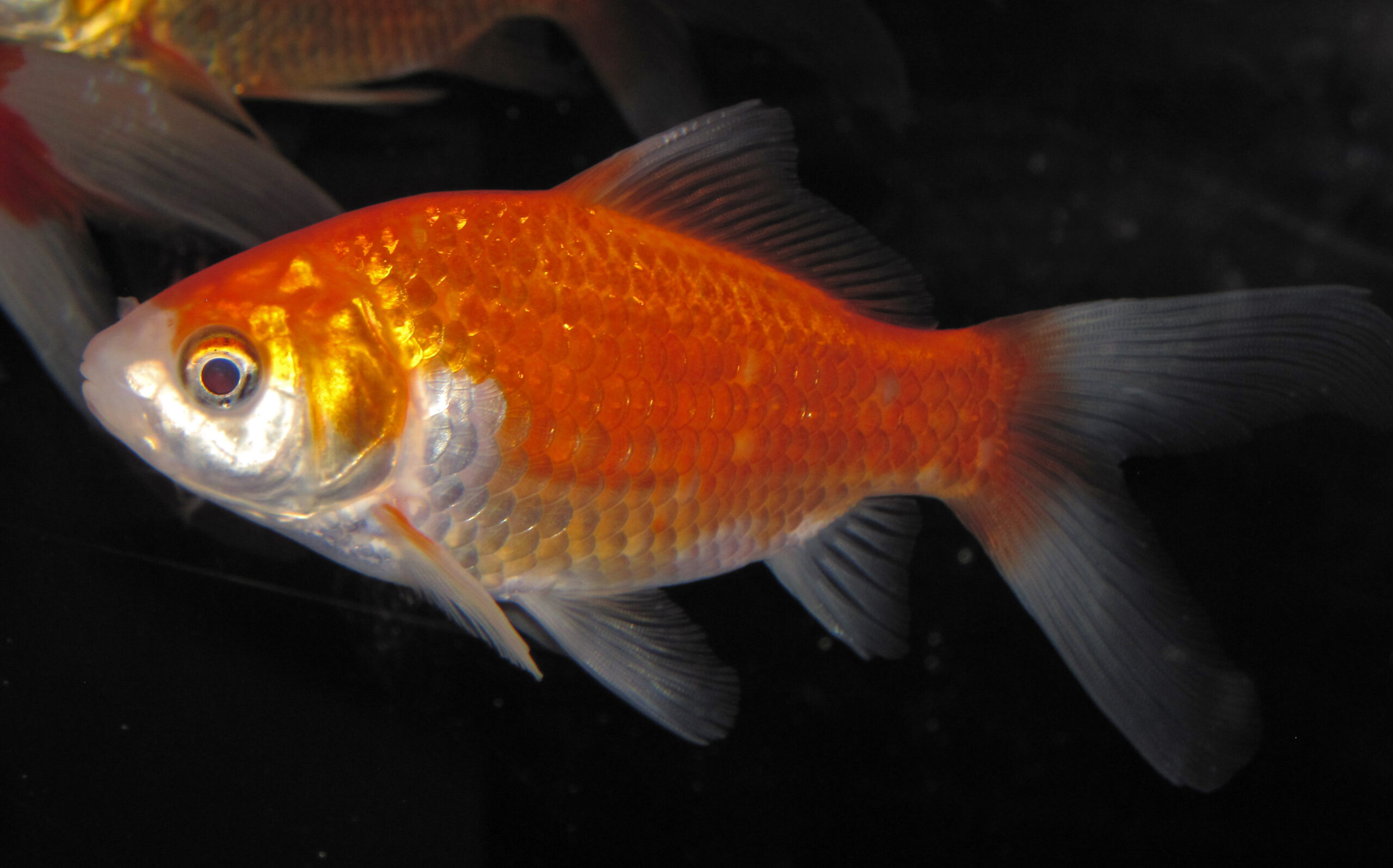
💡 “Coldwater” does not mean “low maintenance.” The most famous coldwater fish, the goldfish, is a big, messy waste-producer that needs a large tank — the opposite of a nano.
Coldwater vs tropical aquarium: head to head
| Tropical | Coldwater | |
|---|---|---|
| Heater needed? | Yes | No |
| Typical temp | 76–80 °F | ~64–72 °F |
| Fish variety | Huge (most nano fish) | Limited |
| Good nano fit? | Yes | Only a few species |
| Temp stability | Heater holds it steady | Drifts with the room |
| Best for | Most beginners | Cool rooms, no-heater setups |
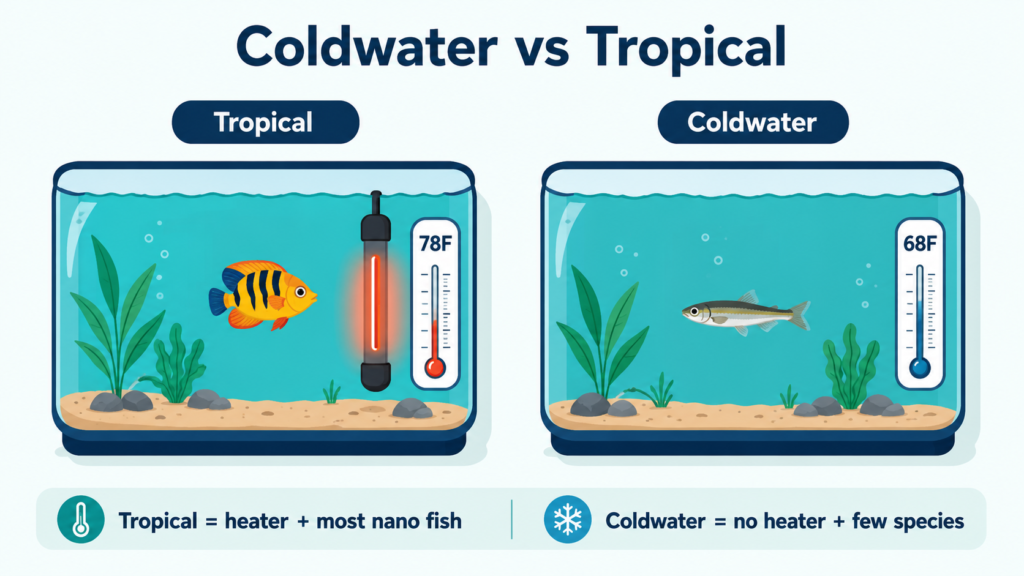
Good tropical fish for a nano tank
This is where tropical wins for small tanks — almost all popular nano fish are tropical:
- Betta — a centerpiece fish for a 5-gallon-plus tank.
- Chili rasboras & ember tetras — tiny schoolers for 10 gallons.
- Cherry shrimp — colorful, peaceful, great in nano tanks.
- Pygmy corydoras — a small, active bottom-dweller.
Coldwater options for a nano tank
The list is short, because most true coldwater fish get big. Goldfish are out — they need large tanks. Realistic nano-scale coldwater choices include:
- White Cloud Mountain minnows — the classic small coldwater schooling fish.
- Cherry/Neocaridina shrimp — they tolerate a wide temperature range, including unheated tanks in a warm room.
- Snails — hardy cleanup crew that don’t need heat.
Notice the overlap: shrimp and snails thrive either way, which is why a low-tech shrimp tank is a popular no-heater nano.
So which should you choose?
- Want the widest fish choice and steady conditions → tropical (add a small nano heater).
- Cool room, no heater, simple shrimp tank → coldwater works well.
- Set on a goldfish → skip the nano; it needs a much larger tank.
For most beginners, a heated tropical nano is the easiest path — the heater removes the biggest variable (temperature swings), which is exactly the kind of instability behind so many beginner mistakes. Whichever you choose, you still need to cycle the tank first.
Nano fish by temperature type, side by side
Here’s the practical version of the choice — the realistic nano-scale options for each route, with the temperature each wants and a quick note. Notice how short the true coldwater column is, and how shrimp and snails sit comfortably in both:
| Species | Type | Comfortable temp | Nano note |
|---|---|---|---|
| Betta | Tropical | 76–82 °F | Centerpiece fish for 5 gal+ |
| Ember tetra / chili rasbora | Tropical | 74–80 °F | Tiny schoolers, best in 10 gal |
| Pygmy corydoras | Tropical | 72–79 °F | Active bottom shoaler |
| White Cloud Mountain minnow | Coldwater | 64–72 °F | The classic no-heater nano fish |
| Cherry / Neocaridina shrimp | Either | 65–78 °F | Thrive heated or unheated |
| Snails (nerite, ramshorn) | Either | 65–80 °F | Hardy cleanup crew, no heat needed |
Related reading
New to the hobby? Start with the nano aquarium setup guide and the tank size guide. Leaning tropical and love bettas? See our betta fish care guide, or browse the best nano tank fish for beginners. For background, see coldwater fish.
Frequently Asked Questions
Is a coldwater or tropical tank easier for beginners?
For a nano tank, tropical is usually easier because a heater keeps the temperature stable and you get far more suitable fish. Coldwater is simpler only as a no-heater shrimp tank.
Can goldfish live in a nano tank?
No. Goldfish grow large and produce a lot of waste; they need a big tank. For a small coldwater tank, white cloud mountain minnows or shrimp are far better choices.
Do I need a heater for a coldwater tank?
Not usually — that’s the point of coldwater. But the room must stay reasonably stable; a tank that swings cold at night still stresses fish, so a heater can help even “coldwater” setups in chilly homes.
Can I keep tropical and coldwater fish together?
Generally no. Their temperature needs don’t overlap well, so one group is always stressed. Pick one temperature range and stock fish that suit it.
Is a coldwater nano tank really cheaper to run?
A little. Skipping the heater saves the up-front cost and a few dollars of electricity a year, which is why no-heater shrimp tanks are popular. But the saving is small, and a coldwater tank in a cold or fluctuating room can still swing in temperature — sometimes a small heater set low is worth it just for stability. Don’t choose coldwater purely to save money; choose it because your room stays cool and steady and you’re happy with the shorter fish list.