
A good aquarium maintenance schedule is what separates a tank that stays crystal-clear for years from one that lurches between algae blooms and emergencies. The secret for nano tanks is counterintuitive: it is not about doing more, it is about doing a little, consistently, and avoiding the over-cleaning that crashes a tank. A small water volume is less forgiving than a big one, so a steady rhythm of small tasks beats occasional deep cleans every time.
Most maintenance guides hand you a generic list and never explain the nano-specific balance: which tasks are essential, which are weekly versus monthly, and — crucially — which “cleaning” habits actually harm your tank. This guide lays out a complete daily-to-quarterly aquarium maintenance schedule, flags the over-maintenance traps, and backs it with three original reference tables so upkeep takes minutes, not weekends.
The Complete Nano Tank Maintenance Schedule
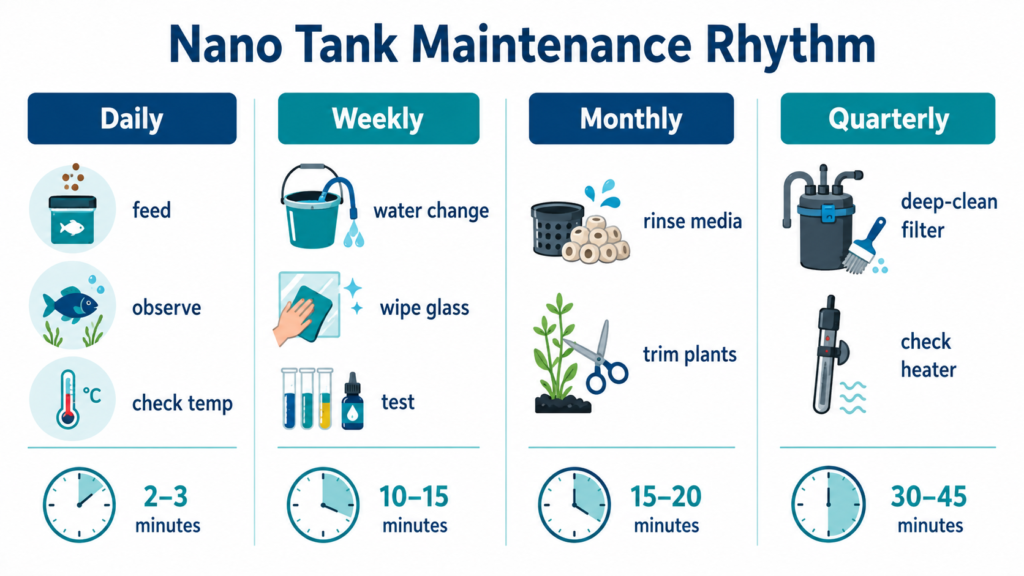
Aquarium maintenance breaks down neatly by frequency. Daily tasks take seconds, weekly tasks take 15 to 20 minutes, and monthly and quarterly tasks are quick check-ups. The schedule below is the heart of this guide — print it, keep it near the tank, and your nano will mostly run itself.
| Frequency | Tasks | Time |
|---|---|---|
| Daily | Feed appropriately, remove uneaten food, glance at fish behavior, check temperature, confirm filter is running | 1–2 min |
| Weekly | 10–25% water change, wipe glass, light gravel/surface vacuum, test water, top off evaporation | 15–20 min |
| Monthly | Rinse filter media (in old tank water), check GH/KH, inspect equipment, trim plants | 15 min |
| Quarterly | Deep-clean filter housing/impeller, replace worn media gradually, check heater accuracy, declutter supplies | 30 min |
Water Changes: The One Task That Matters Most
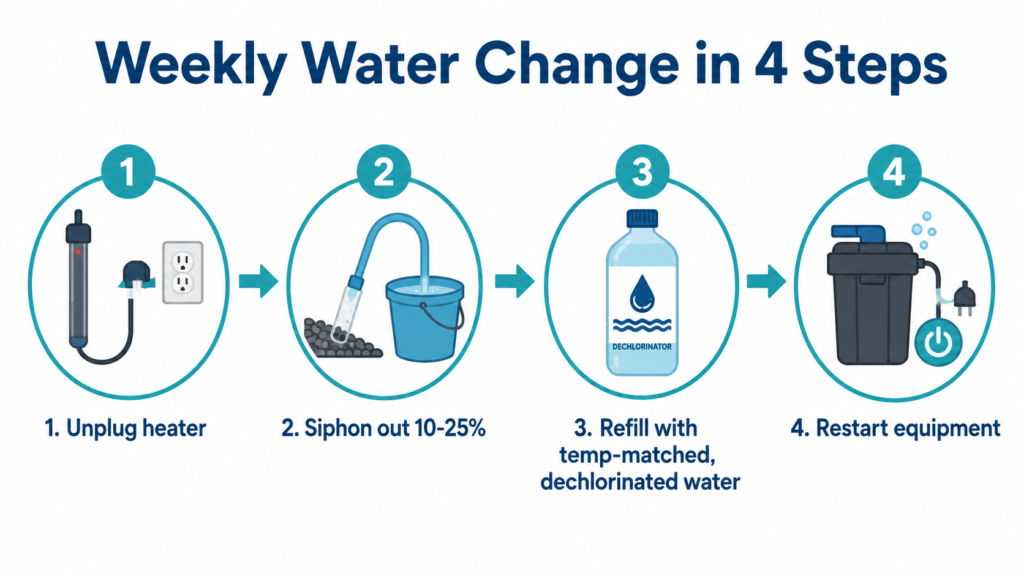
If you do nothing else, do regular water changes. They are the single most effective maintenance task, removing nitrate and replenishing minerals that fish and plants deplete. For a nano tank, a weekly change of 10 to 25 percent is the sweet spot — small and frequent beats large and occasional, because a big swap can swing temperature and chemistry enough to stress livestock, especially shrimp.
Always match the new water’s temperature to the tank and treat it with a dechlorinator, since chlorine and chloramine harm fish and kill beneficial bacteria. Water changes are also how you keep the parameters in our aquarium water parameters guide in line — particularly nitrate, which steadily climbs between changes. The water-change guide below keeps it simple.
| Step | Do this | Why |
|---|---|---|
| Amount | 10–25% weekly | Removes nitrate without shocking livestock |
| Temperature | Match the tank | Prevents stressful swings |
| Dechlorinate | Always treat new water | Chlorine harms fish and bacteria |
| Vacuum | Light surface/gravel pass | Lifts debris without disturbing the bed |
| Frequency | Same day each week | Consistency keeps parameters steady |
Tip: A turkey baster is the nano keeper’s secret weapon. It spot-cleans debris from between plants and the substrate surface with surgical precision — no need to deep-vacuum the whole bed and disturb your beneficial bacteria.
The Over-Maintenance Traps to Avoid
Here is what most schedules never tell you: you can absolutely clean a tank to death. The beneficial bacteria that keep your fish alive live in the filter media and substrate, so aggressive cleaning of either can crash your cycle and trigger a deadly ammonia spike. The goal of maintenance is a stable, mature ecosystem — not a sterile one.
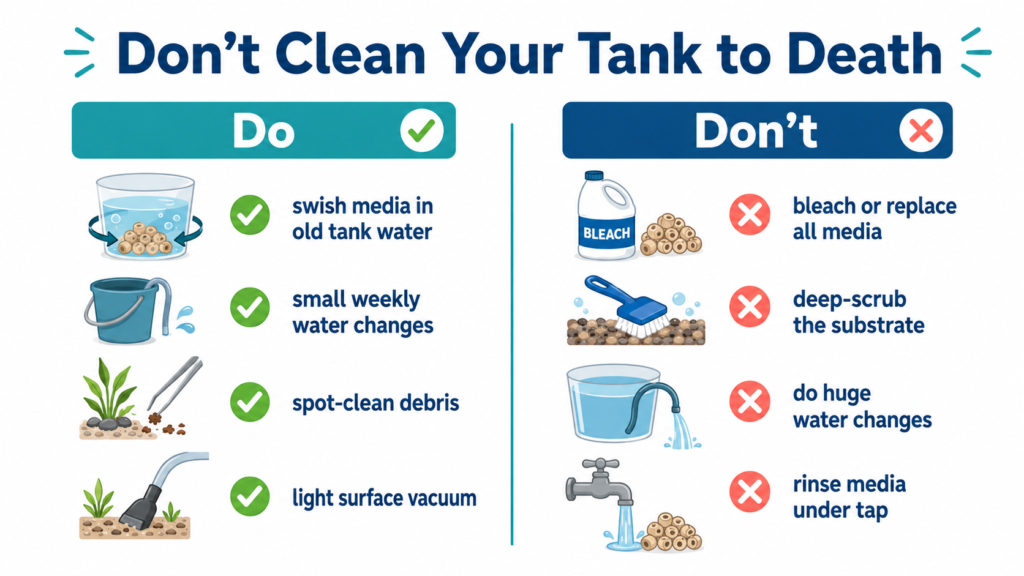
The cardinal sins are bleaching or replacing all your filter media at once, deep-scrubbing the entire substrate, and doing massive water changes “to be thorough.” Each of these wipes out bacteria faster than they can recover. When in doubt, do less. For the broader list of habits that sink tanks, see our 9 beginner aquarium mistakes. The do’s-and-don’ts table makes the line clear.
| Do | Don’t |
|---|---|
| Rinse media in old tank water | Bleach or replace all media at once |
| Small, frequent water changes | Occasional massive water changes |
| Spot-clean and lightly vacuum | Deep-scrub the whole substrate |
| Let the tank mature | Chase a “sterile,” spotless tank |
| Keep a consistent routine | Skip weeks, then over-correct |
For a neutral overview of the hobby and its routines, the Wikipedia entry on fishkeeping covers maintenance and the nitrogen cycle in more depth.
Keep Exploring NanoTank Lab
- Aquarium Water Parameters Explained — what your weekly tests are checking.
- How to Cycle a New Aquarium (fishless cycling) — the bacteria your maintenance protects.
- Best Nano Tank Filter — how to clean media without crashing your cycle.
- 9 Beginner Aquarium Mistakes — including over-cleaning.
- How to Set Up a Nano Aquarium — the full beginner build.
Frequently Asked Questions
How often should I do a water change on a nano tank?
Do a 10 to 25 percent water change once a week for most nano tanks. Small, frequent changes keep nitrate low and parameters stable without the shock that a large, occasional change causes. Always match the new water’s temperature and treat it with a dechlorinator. Heavily stocked tanks may need slightly more; lightly stocked planted tanks may need slightly less.
What aquarium maintenance should I do daily?
Daily tasks take a minute or two: feed an appropriate amount and remove anything uneaten, glance at your fish to check behavior and health, confirm the temperature is correct, and make sure the filter is running. These quick checks catch problems — a heater failure, a sick fish, a stopped filter — early, when they are easy to fix.
Can you over-clean an aquarium?
Yes, and it is a common mistake. Beneficial bacteria live in your filter media and substrate, so bleaching media, replacing it all at once, deep-scrubbing the substrate, or doing huge water changes can crash your cycle and cause a toxic ammonia spike. Aim for a stable, mature tank, not a sterile one — when in doubt, clean less.
How do I clean my filter without harming the tank?
Rinse the media in a bucket of old tank water removed during a water change, never under the tap, because chlorine kills the beneficial bacteria. Only clean media when flow noticeably drops, roughly monthly, and never replace all of it at once. Clean the impeller or air stone quarterly so flow stays steady. This preserves your biological filtration.
Do I need to vacuum the gravel in a nano tank?
Lightly, yes. A gentle surface pass during your weekly water change lifts debris without digging deep into the substrate, where beneficial bacteria live. In a planted nano tank, a turkey baster to spot-clean between plants is often enough. Avoid aggressive deep-vacuuming, which disturbs roots and bacteria and can do more harm than good.
What happens if I skip maintenance for a while?
Nitrate and debris build up, algae spreads, and water quality slowly declines, stressing fish. The fix is not one giant cleanup, which would shock the tank — instead, resume your normal small weekly water changes and let it recover over a few weeks. Consistency is what keeps a nano tank healthy, so a steady routine beats sporadic deep cleans every time.