
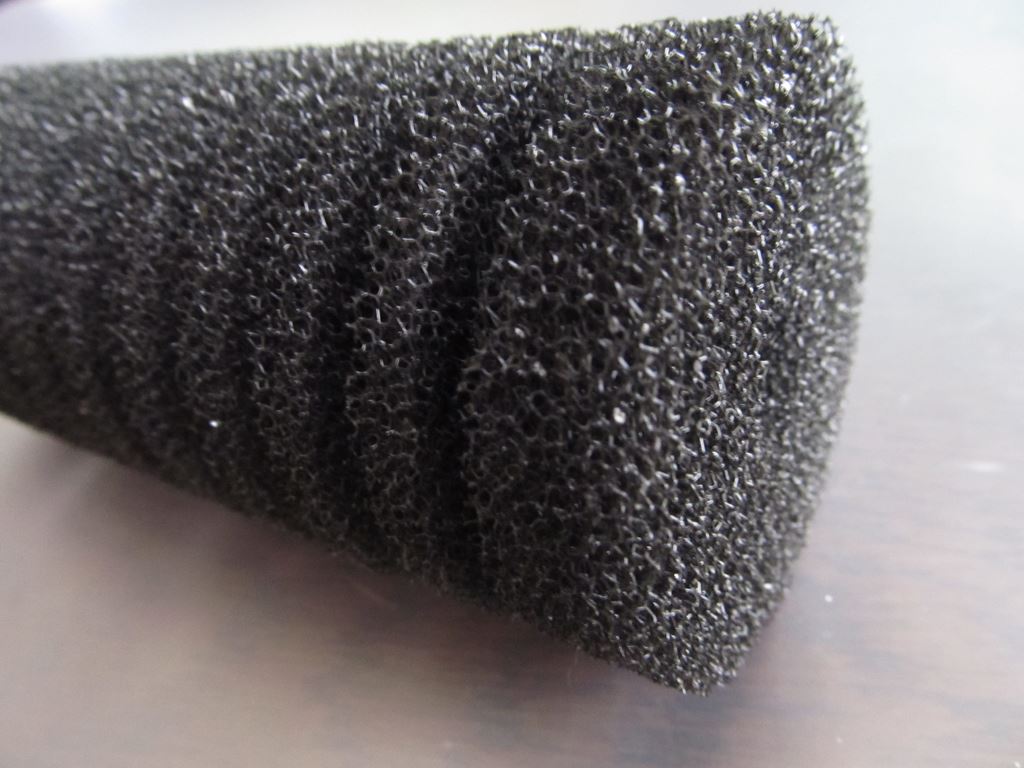
Choosing the best nano tank filter is less about brand and more about one question most buying guides never ask: what lives in your tank? A filter that is perfect for a community of tetras can be a death trap for baby shrimp, and a filter that suits a shrimp colony may be too weak for a stocked community tank. Match the filter to your livestock and flow needs, and almost any quality unit will keep your water clean.
Most “best filter” lists just rank products and skip the fundamentals: the difference between mechanical and biological filtration, why flow rate matters as much as filtration power, and how to protect fry and shrimp. This guide compares the real filter types for nano tanks, settles the classic sponge-versus-HOB debate, and backs it with three original reference tables so you buy the right filter the first time.
What a Filter Actually Does (It’s Not Just Cleaning)
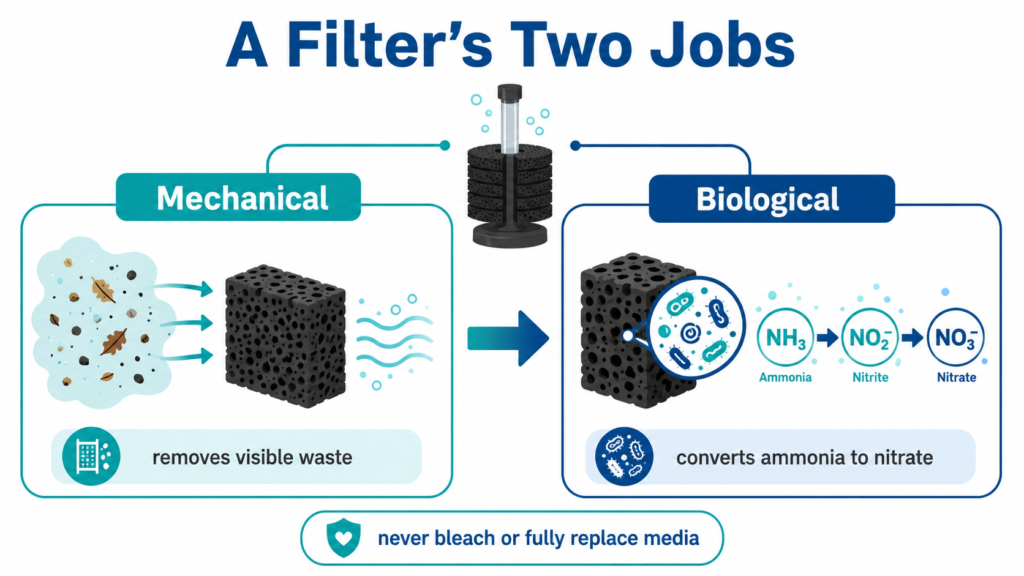
A filter does two distinct jobs, and beginners usually only think about the first. Mechanical filtration physically strains debris from the water, which is the visible “cleaning.” But the more important job is biological filtration: the filter media is the primary home for the beneficial bacteria that convert toxic ammonia into safer nitrate — the same nitrogen cycle your tank depends on. That is why you never fully replace or bleach your filter media, and why a filter is non-negotiable even in a heavily planted tank.
Because biological filtration lives in the media, the best nano tank filter is one with plenty of media volume and gentle, consistent flow — not just the highest “gallons per hour” number on the box. In a small tank, too much flow stresses fish and blasts the substrate, while too little leaves dead spots. The type comparison below sorts the main options.
| Filter type | Flow | Best for | Pros | Cons |
|---|---|---|---|---|
| Sponge filter | Gentle | Shrimp, fry, bettas | Cheap, fry-safe, great bio media, no moving parts | Needs an air pump; visible in tank |
| Hang-on-back (HOB) | Moderate (often adjustable) | Community nano tanks | Easy to use, good flow, hidden media | Bare intake can harm fry/shrimp |
| Internal power filter | Moderate | Small all-in-one tanks | Compact, simple | Takes up in-tank space |
| Nano canister | Adjustable | Aquascapes, planted tanks | Lots of media, clean look | Pricier, more setup |
Sponge vs HOB: The Beginner Showdown
For nano tanks, the real choice usually comes down to a sponge filter versus a hang-on-back (HOB) filter. A sponge filter is driven by an air pump, has no moving parts, lasts for years, and provides gentle flow with a huge biological surface — making it the gold standard for shrimp tanks, fry, and slow-moving fish like bettas. Its only real downsides are needing a separate air pump and being visible in the tank.
A HOB filter hangs on the rim, is dead simple to set up and maintain, and many nano models have an adjustable flow knob. It is the easiest pick for a typical community tank. The one catch is the intake: a bare HOB intake will suck up baby shrimp and tiny fry, so if you keep either, slip a pre-filter sponge over the intake. The head-to-head table makes the decision quick.
| If you keep… | Best choice | Why |
|---|---|---|
| Shrimp colony | Sponge filter | Gentle flow, fry-safe, no bare intake |
| Betta | Sponge or low-flow HOB | Bettas hate strong current |
| Community of small fish | HOB (adjustable) | Easy, good flow, hidden media |
| Planted aquascape | Nano canister or HOB | Clean look, ample media |
| Breeding / fry | Sponge filter | Cannot harm babies |
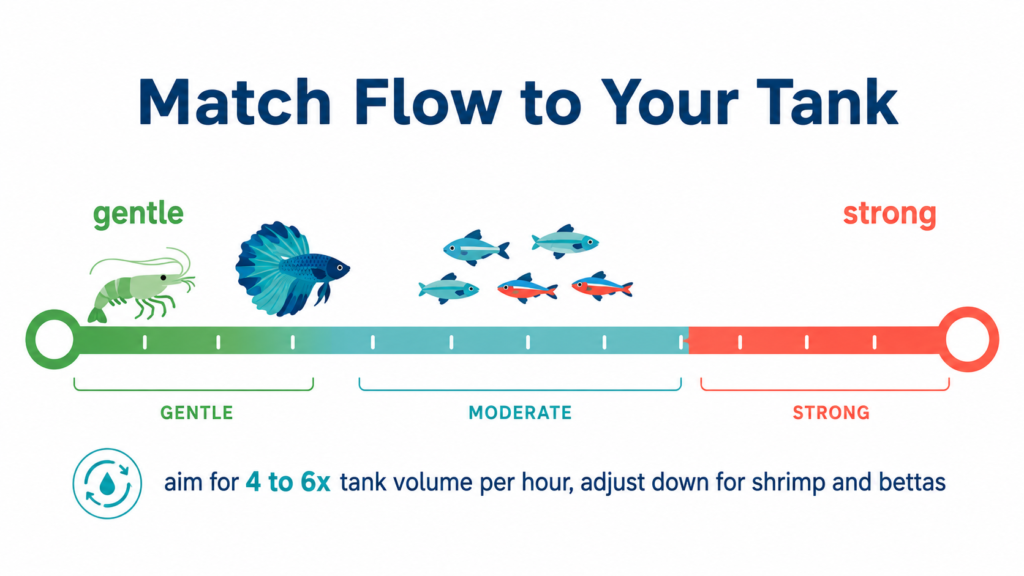
Tip: If your filter’s flow is too strong for a betta or shrimp, you do not need a new filter. A DIY baffle (a cut water bottle or sponge over the outflow) or a pre-filter sponge tames the current for a couple of dollars.
A sponge filter is the safest default for the most common nano livestock — shrimp and bettas — which is why our cherry shrimp care guide and betta fish care guide both recommend one. For a planted community tank, a quality HOB with a pre-filter is the easiest all-rounder.
Sizing, Setup, and Maintenance
For sizing, look for a filter rated at or slightly above your tank volume, then adjust flow down if needed — turnover of about four to six times the tank volume per hour is a good target for a nano tank. Remember that the filter is part of your cycle: when you set up a new tank, the filter media is where beneficial bacteria establish, so run it from day one during your fishless cycle. The full equipment list is in our nano aquarium starter checklist.
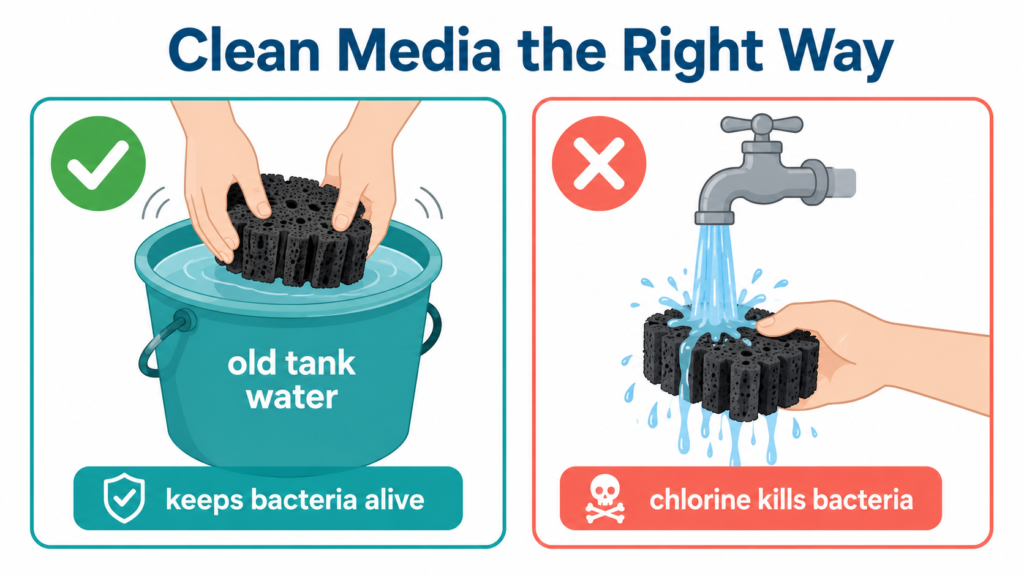
Maintenance is simple and easy to get wrong. Never rinse filter media under tap water — the chlorine kills your beneficial bacteria. Instead, swish the media in a bucket of old tank water during a water change, only when flow noticeably drops. The maintenance table below keeps it foolproof.
| Task | How often | How |
|---|---|---|
| Check flow | Weekly | Watch for reduced output = time to clean |
| Rinse media | Every 3–6 weeks (as needed) | Swish in old tank water, never tap |
| Clean impeller / air stone | Monthly | Remove gunk so flow stays steady |
| Replace media | Rarely | Only when falling apart; never all at once |
For a neutral primer on how aquarium filtration works, the Wikipedia entry on aquarium filters covers the mechanical, biological, and chemical stages in more detail.
Keep Exploring NanoTank Lab
- How to Set Up a Nano Aquarium — where the filter fits in the full build.
- How to Cycle a New Aquarium (fishless cycling) — why the filter is the heart of your cycle.
- Cherry Shrimp Care Guide — why shrimp tanks need a sponge filter.
- Betta Fish Care in a Nano Tank — taming flow for a betta.
- Nano Aquarium Starter Checklist — the complete gear list.
Frequently Asked Questions
What is the best filter for a nano tank?
It depends on your livestock. For shrimp, fry, and bettas, a sponge filter is the best choice because it provides gentle, fry-safe flow and excellent biological filtration. For a community of small fish, an adjustable hang-on-back filter is the easiest all-rounder. Match the filter’s flow to your fish rather than chasing the highest gallons-per-hour rating.
Sponge filter or HOB filter — which is better?
Neither is universally better; they suit different tanks. Sponge filters are gentle, cheap, fry-safe, and ideal for shrimp and bettas, but need an air pump and sit visibly in the tank. HOB filters are easy to use, offer stronger adjustable flow, and hide their media, but a bare intake can harm fry and shrimp unless you add a pre-filter sponge.
Can a nano tank run without a filter?
It is not recommended for beginners. A filter houses the beneficial bacteria that process toxic ammonia, and it keeps water moving and oxygenated. Heavily planted “walstad-style” tanks can sometimes run filterless, but they require experience and careful stocking. For a reliable beginner nano tank, always use a filter.
How do I make my filter flow gentler?
Use the flow knob if your filter has one, or add a baffle. A simple DIY baffle — a cut plastic bottle or a sponge placed over the outflow — disperses the current cheaply. A pre-filter sponge on the intake both slows suction and protects shrimp and fry. Sponge filters are inherently gentle, so they need no modification.
How often should I clean my nano tank filter?
Only when flow noticeably drops, usually every three to six weeks. Rinse or swish the media in a bucket of old tank water, never under the tap, because chlorine kills the beneficial bacteria living in the media. Clean the impeller or air stone monthly to keep flow steady, and never replace all the media at once.
What size filter do I need for a 5 or 10 gallon tank?
Choose a filter rated at or slightly above your tank size, aiming for roughly four to six times the tank volume in turnover per hour. For a 5-gallon, a small sponge filter or a nano HOB is plenty; for a 10-gallon, a slightly larger HOB or sponge works well. If the flow feels too strong, simply dial it down or add a baffle.