
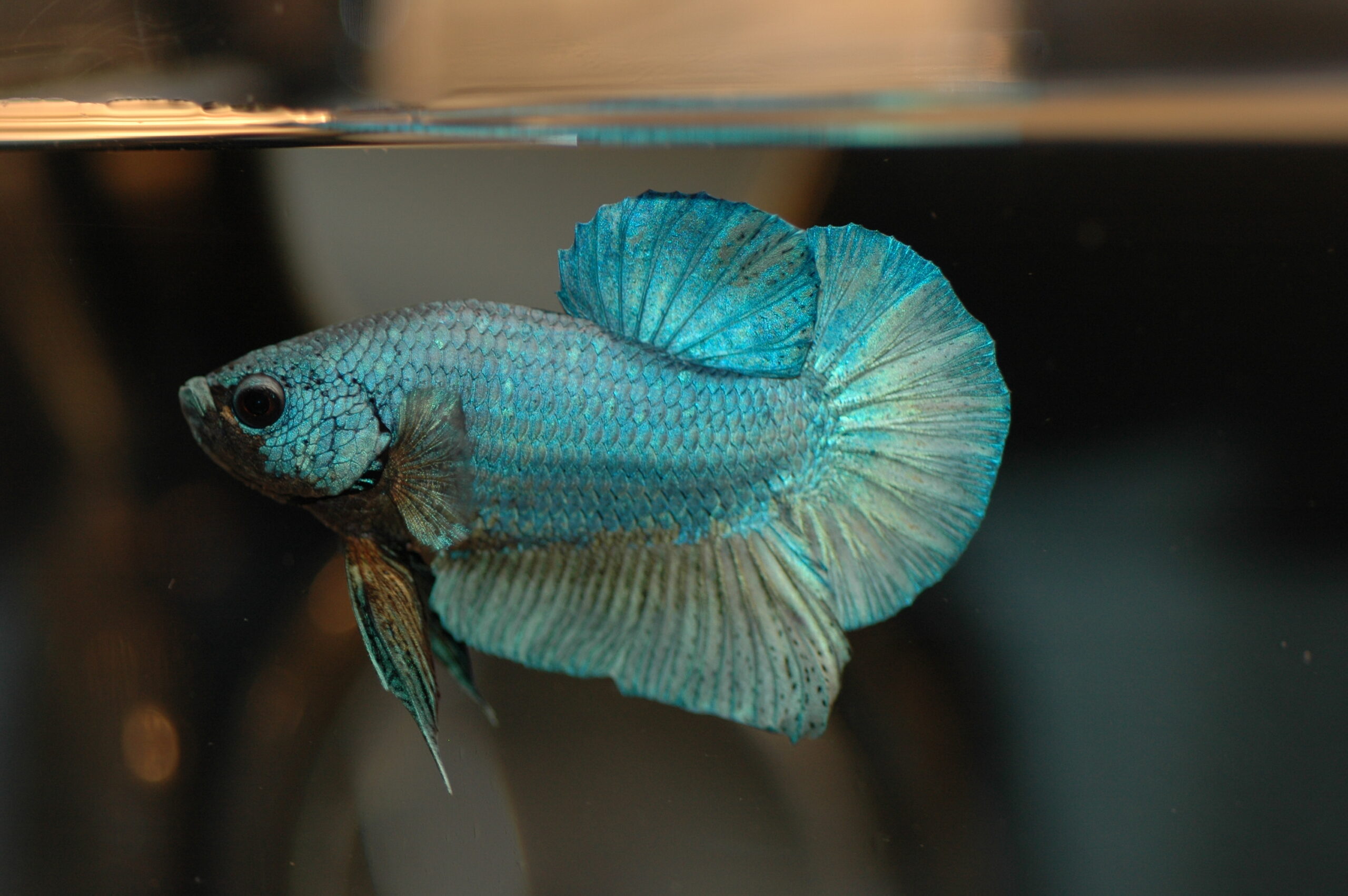
Good betta fish care starts by unlearning the biggest myth in the hobby: that a betta is happy in a tiny bowl. Bettas are tropical fish that thrive in a small heated, filtered tank — and a nano aquarium is the perfect home. Get the basics right and a betta is one of the most rewarding, personable fish a beginner can keep.
This guide covers everything: tank size, temperature, filtration, diet, tankmates, and the myths that quietly harm these fish.
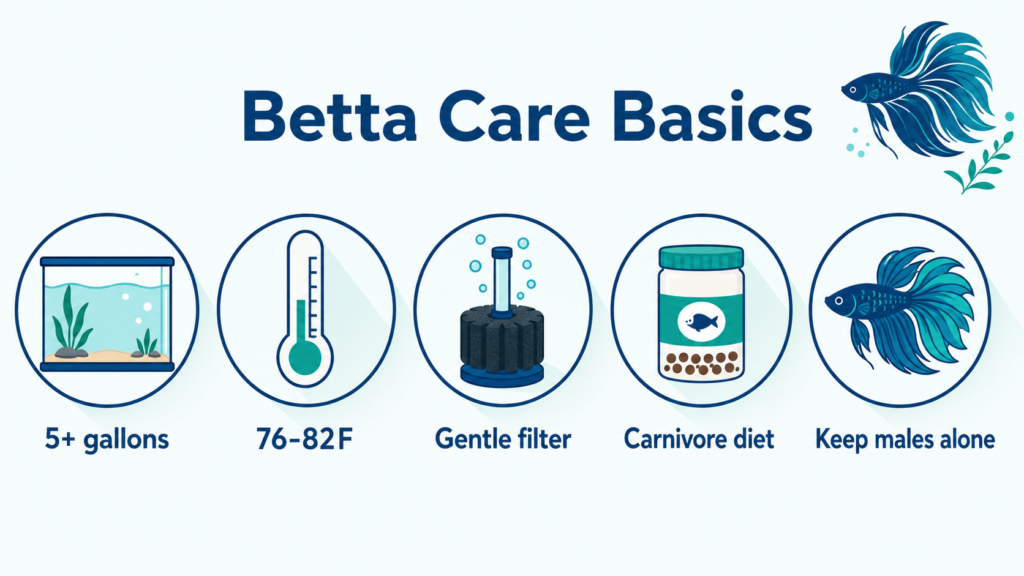
Betta fish care at a glance
| Need | What bettas want |
|---|---|
| Minimum tank | 5 gallons (bigger is better) |
| Temperature | 78–82 °F (heater required) |
| Filtration | Yes — gentle flow (sponge filter ideal) |
| pH | ~6.5–7.5, stable |
| Diet | Carnivore — betta pellets + occasional treats |
| Temperament | Solitary; males must be kept alone |
| Lifespan | ~3–5 years with good care |
💡 Bettas come from warm, slow waters in Southeast Asia — not puddles. They need heat, clean water, and calm flow. Nail those three and most other problems never appear.
Tank size: why 5 gallons is the floor
A betta can survive in less, but it won’t thrive. Five gallons or more holds enough water to stay warm and stable, fits a heater and gentle filter, and gives the fish room to explore. Bowls and tiny “betta cubes” can’t hold stable heat or support a filter, which is exactly why they lead to short, stressful lives. If you’re choosing a tank, our nano tank size guide explains why a little more volume makes everything easier.
Heat & water: the part beginners miss
Bettas are tropical, so a heater isn’t optional — room temperature in most homes is too cold and leaves them sluggish and prone to illness. Keep the tank a steady 78–82 °F. They also need clean, cycled water: before a betta ever moves in, the tank must be fully cycled so beneficial bacteria handle the waste. If you’re weighing a no-heater setup, see our coldwater vs tropical comparison — bettas land firmly on the tropical side.
Filtration & flow
Bettas need filtration for clean water, but their long fins make them weak swimmers, so strong currents stress them. A gentle filter — a sponge filter or a baffled output — gives biological filtration without blasting the fish around. If your betta is constantly fighting the flow or hiding from it, dial the current down.
Feeding a betta
Bettas are carnivores, not flake-eaters by nature. Feed a quality betta pellet as the staple, with occasional treats like frozen or freeze-dried bloodworms and brine shrimp. Feed a small amount once or twice a day — only what they finish in a minute or two. Overfeeding is the most common feeding mistake and fouls the water fast; a fasting day each week is fine.
Tankmates & temperament
Male bettas are territorial and must never share a tank with another betta — the “fighting fish” name is earned. In a 5-gallon, a betta is often happiest alone. In a larger, well-planted nano (around 10 gallons), peaceful companions like snails or shrimp can sometimes work, though a feisty betta may still hunt shrimp. Watch behavior closely and have a backup plan.
Here’s a quick compatibility guide for a planted 10-gallon nano — never a guarantee, since temperament varies fish to fish:
| Tankmate | Verdict | Why |
|---|---|---|
| Another betta (male) | ❌ Never | Will fight, often to the death |
| Nerite snails | ✅ Usually fine | Peaceful, no fins to nip, eat algae |
| Cherry shrimp | ⚠️ Sometimes | Some bettas hunt them; best in heavy planting |
| Fin-nipping fish (tiger barbs) | ❌ No | Will shred a betta’s long fins |
| Other male betta in a divider | ⚠️ Avoid | Constant flaring stresses both fish |
Keeping a betta healthy
Most betta problems are husbandry problems. Keep the water clean with weekly partial changes, hold the temperature steady, feed sparingly, and provide gentle flow and places to rest near the surface (bettas breathe air via a special organ). A betta showing rich color, an appetite, and active exploring is a well-kept betta. For anything that looks like illness, consult a knowledgeable aquatic vet or specialist resource rather than guessing.
Related reading
Setting up for your first betta? Start with the nano aquarium setup guide, then cycle the tank before your fish arrives. Weighing other species too? Browse the best beginner nano tank fish. For species background, see Betta splendens.
Frequently Asked Questions
What size tank does a betta fish need?
At least 5 gallons. It holds stable heat, fits a gentle filter, and gives the fish room to thrive. Bowls and tiny cubes can’t support a heater or filter and lead to stressed, short-lived fish.
Do betta fish need a heater and filter?
Yes to both. Bettas are tropical and need a steady 78–82 °F, plus a gentle filter for clean, cycled water. The old “no heater, no filter” advice is a myth that harms them.
Can betta fish live with other fish?
Never with another betta. In a larger planted nano, peaceful snails or shrimp may work, but results vary — some bettas hunt shrimp. In a 5-gallon, keeping the betta alone is the safe choice.
How long do betta fish live?
Around 3–5 years with good care — proper tank size, stable heat, clean water, and a sensible diet. Bettas sold as adults may already be a year or more old.
How often should I feed a betta fish?
Once or twice a day, only what they finish in a minute or two — a few quality betta pellets per meal. Bettas have tiny stomachs, so overfeeding is the most common feeding mistake; it bloats the fish and fouls the water. A weekly fasting day is healthy and helps prevent constipation.