
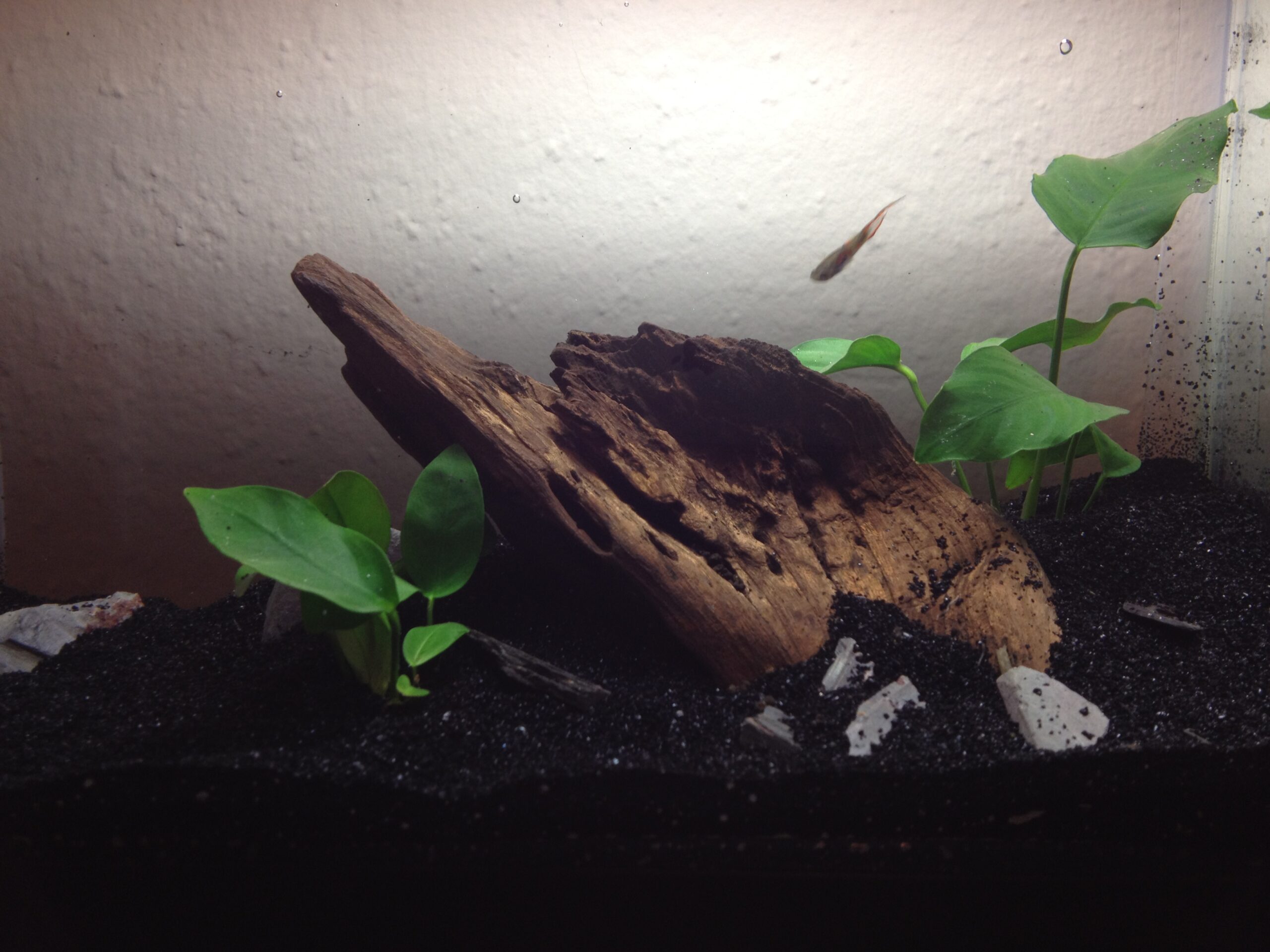
Learning how to cycle an aquarium is the single most important step between buying a tank and keeping fish alive in it. “Cycling” means growing an invisible colony of helpful bacteria that neutralize fish waste before any fish move in — skip it, and the most common beginner heartbreak (dead fish in a brand-new tank) is almost guaranteed.
This guide walks you through fishless cycling — the safe, humane way to prepare a new nano tank — step by step: what the nitrogen cycle is, exactly what to buy, what numbers to watch, and how to know the day your tank is finally ready for fish.
What “cycling” actually means: the nitrogen cycle
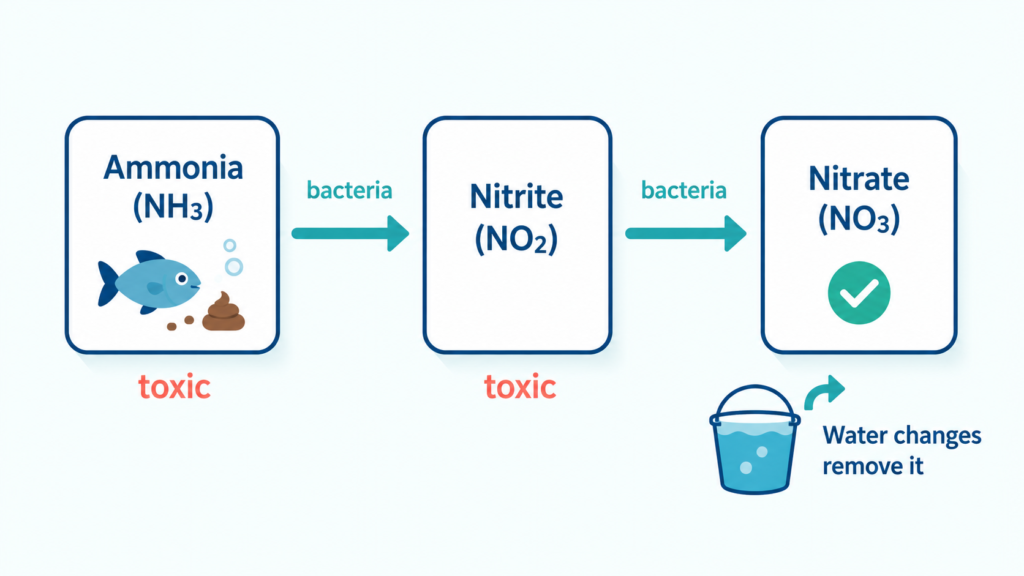
Fish constantly produce waste, and leftover food rots — both release ammonia, which is highly toxic to fish even in tiny amounts. In a healthy tank, two groups of beneficial bacteria handle it in a relay:
- One group of bacteria eats ammonia (NH₃) and turns it into nitrite (NO₂⁻) — which is also toxic.
- A second group eats the nitrite and turns it into nitrate (NO₃⁻) — which is relatively harmless at low levels.
- You remove the built-up nitrate with routine water changes (and live plants help soak some up).
“Cycling a tank” simply means running this waste chain with no fish present until both bacteria colonies are large enough to process a full day’s waste in 24 hours. They live mostly in your filter media and substrate — not floating in the water — which is why you never throw out old filter media.
💡 Beginner takeaway: you are not growing the tank, you are growing the bacteria. The fish come last, not first.
Fishless vs fish-in cycling: why fishless wins
There are two ways to cycle a tank. The old “fish-in” method uses live fish as the ammonia source, which means the fish swim in their own toxins for weeks. Fishless cycling uses an ammonia source you add yourself, so no animal suffers. For a beginner, fishless is safer, cheaper in the long run, and far less stressful.
| Fishless cycling | Fish-in cycling | |
|---|---|---|
| Ammonia source | Bottled ammonia or fish food you add | Live fish’s waste |
| Animal stress | None — no fish present | High — fish exposed to toxins |
| Speed you can push it | Fast (dose high, no risk) | Slow (must keep levels low for fish) |
| Daily work | Test + dose | Test + frequent water changes |
| Best for | Beginners | Emergencies only |
What you need before you start
You don’t need much, but a couple of items are non-negotiable. A reliable liquid test kit is the one tool you cannot skip — paper strips are too vague to cycle a tank by.
| Item | Why you need it | Skip it? |
|---|---|---|
| Liquid test kit (ammonia, nitrite, nitrate, pH) | The only way to “see” the cycle happening | No — essential |
| Ammonia source (pure ammonia or fish food) | Feeds the bacteria you’re growing | No — essential |
| Dechlorinator (water conditioner) | Tap-water chlorine kills the bacteria | No — essential |
| Running filter + heater | Bacteria live in the filter; warmth speeds them up | No |
| Bottled live bacteria starter | Can shorten the cycle (optional) | Yes — optional |
If your tank isn’t built yet, set it up first with our step-by-step nano aquarium setup guide, then come back here to cycle it.
How to cycle an aquarium (fishless), step by step
Step 1 — Fill and dechlorinate the tank
Set up the tank fully — substrate, filter, heater, plants — and fill it with water treated with dechlorinator. Turn the filter and heater on and set the temperature to about 78–82 °F (26–28 °C). Warmer water grows the bacteria faster. Let everything run for a day so the temperature stabilizes.
Step 2 — Add ammonia and dose to 2–4 ppm
Now give the bacteria something to eat. Add your ammonia source until a test reads 2–4 ppm of ammonia — that’s the sweet spot most aquarists target. With pure ammonia, start with a few drops, test, and add more gradually until you hit the range. With the fish-food method, drop in a small pinch and let it rot. Don’t overshoot: above ~5 ppm can actually stall the bacteria.
Step 3 — Wait for nitrite to appear
Test every couple of days. Over roughly 1–2 weeks, you’ll watch ammonia start to fall while nitrite climbs from zero. That rising nitrite is proof your first bacteria colony is alive and working. Top the ammonia back up to ~2–3 ppm whenever it drops, so the colony keeps growing.
Step 4 — Wait for nitrate to appear
The second colony is slower. After another 1–2 weeks, nitrite will peak and then start falling, and nitrate will begin showing up on your test. This is the home stretch — both bacteria groups are now established and converting waste down the chain, just as shown in the nitrogen cycle.
Step 5 — Run the final 24-hour test
This is the confirmation that matters. Dose ammonia to about 2 ppm, wait 24 hours, and test again. If both ammonia and nitrite read 0 ppm (with nitrate present), your tank can now process a full dose of waste in a day — it’s fully cycled. If either is still above 0, keep feeding and waiting, then test again in a few days.
Step 6 — Big water change, then add fish
By now your nitrate is probably high. Do a large water change (50–80%) to bring nitrate down to a safe level (under ~20–40 ppm), match the new water’s temperature, and dechlorinate it. Now — and only now — you can add your first fish. Add a small number at first so the bacteria can scale up to the real, ongoing waste load.
How long does cycling take (and how to speed it up)?
A fishless cycle usually takes 3 to 6 weeks. It feels slow because you’re growing living organisms — there’s no way to rush biology completely, but a few things genuinely help:
- Seed the filter — squeeze some media or grab a handful of substrate from an established, healthy tank to transplant a starter colony.
- Use bottled bacteria — a quality live-bacteria starter can shave days to a couple of weeks off the wait.
- Keep it warm — 78–82 °F speeds bacterial growth versus cooler water.
- Add an air stone — nitrifying bacteria are aerobic; more oxygen, faster growth.
- Don’t clean too hard — never rinse filter media in chlorinated tap water; you’ll kill the colony you just grew.
🚨 Stalled cycle? The usual culprits are a pH that has crashed too low, chlorine from untreated top-ups, or an ammonia overdose above ~5 ppm. Fix the cause, do a partial water change, and the cycle restarts.
How to read your test results at a glance
| Reading | What it means | Stage |
|---|---|---|
| Ammonia up, nitrite 0, nitrate 0 | Cycle just started | Week 1 |
| Ammonia falling, nitrite up | First colony working | Weeks 1–3 |
| Nitrite falling, nitrate rising | Second colony catching up | Weeks 3–5 |
| Ammonia 0 & nitrite 0 in 24h, nitrate present | Cycled — ready for fish | Done |
Related reading
New to all of this? Start with the full nano aquarium setup guide, and if you haven’t bought a tank yet, our nano tank size guide (3 vs 5 vs 10 gallon) will help you choose one that’s easy to keep stable. Once your tank is cycled, you’ll want to know exactly how long to wait before adding fish (internal link, coming soon) and how to read each water parameter in detail (internal link, coming soon).
Frequently Asked Questions
How long does it take to cycle a new aquarium?
Usually 3 to 6 weeks for a fishless cycle. Seeding the filter with media from an established tank, using bottled bacteria, and keeping the water warm (78–82 °F) can shorten it.
How do I know when my tank is fully cycled?
Dose ammonia to about 2 ppm, wait 24 hours, and test. If both ammonia and nitrite read 0 ppm and you have nitrate present, the tank is cycled and ready for a water change and fish.
Can I cycle a tank without a test kit?
Not reliably. A liquid test kit is the only way to see ammonia, nitrite, and nitrate change — without it you’re guessing, and guessing usually means dead fish. It’s the one tool you shouldn’t skip.
Do live plants replace cycling?
No. Plants help by absorbing some ammonia and nitrate, and a heavily planted tank can cycle more gently, but you still need the bacteria colonies to safely handle a fish’s daily waste.
My ammonia won’t drop — is my cycle stuck?
A stalled cycle usually has one of three causes: a pH that has crashed below ~6.5 (which stops the bacteria), chlorine from untreated tap-water top-ups, or an ammonia overdose above ~5 ppm. Test your pH, do a partial water change with dechlorinated water to reset conditions, stop adding ammonia until levels fall back into the 2–3 ppm range, and the colony will usually resume within a few days.